
Ingredients
Masa
- 1 kgmasa harina, or fresh nixtamalised masa
- 300 gcooked rice, blended
- 250 glard or achiote-coloured oil
- 1.5 litrespork broth
- salt
Filling
- 1 kgpork shoulder, cooked and cut in pieces
- 3potatoes, sliced
- 2carrots, sliced
- 150 ggreen beans
- 150 gcooked chickpeas or peas
- 1red pepper, in strips
- olives
- raisins
- prunes, optional
Wrapping
- banana leaves, cut into rectangles and warmed
- kitchen string
To serve
- Salsa Lizano
- black coffee
- at Christmas
Directions
- Cut the leaves into rectangles of about 30 by 25 cm and wipe them clean. Now pass each one briefly over a flame or through boiling water until it turns glossy and darkens. Trim off the thick central rib. Cook the pork first with onion, garlic and salt until tender, keeping every drop of the broth. This is the single most important thing about the flavour.
- Blend the cooked rice with a little broth into a smooth purée. Now beat the lard until light and fluffy. Beat it properly, for several minutes, until it is pale and aerated. That aeration is what makes the masa light, and lard stirred in cold gives a dense heavy tamal.
- Add the masa harina, rice purée and warm broth gradually, beating continuously. Add the broth a little at a time until the masa is soft and spreadable, roughly the consistency of thick hummus.
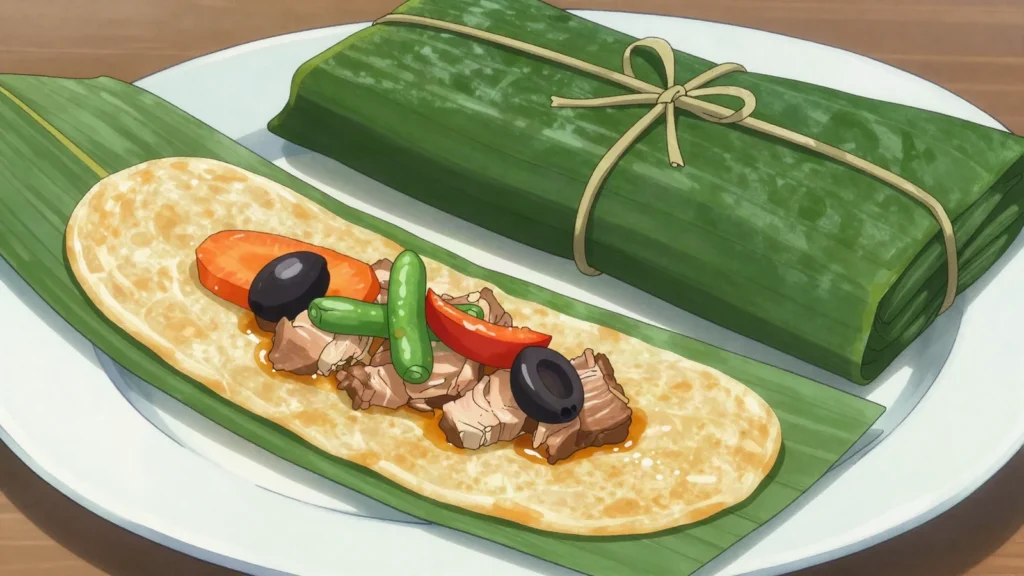
- Season it well and taste it, since unseasoned masa is the commonest disappointment. Colour it with achiote if you want the traditional golden tone. Lay a banana leaf shiny side up and spread a large spoonful of masa into a rectangle in the middle.
- Spread it fairly thin and wide, since Costa Rican tamales are flat rather than plump. The arrangement is fixed by family tradition and everyone has opinions about what belongs. Fold the sides of the leaf over the filling, then the ends, into a flat rectangular parcel. Now take a second parcel and lay it against the first, back to back.
- Tie the two together with string, crossing it both ways, into a piña. Tie them firmly but not so tight that the masa is squeezed out. Lower the piñas into a large pot of boiling water and cook for 1 hour to 1 hour 30 minutes.
- Keep them fully submerged, weighting them with a plate if they float. Top up with boiling water as it evaporates, never cold, which would interrupt the cooking. They are done when the masa is firm and pulls cleanly away from the leaf. Serve them in their leaves, opened at the table, with Salsa Lizano poured over.
Technique
- A piña is two tamales tied together and is how they are counted and given.
- Salsa Lizano with tamales is standard and not negotiable in most households.
- The tamaleada is a social event as much as a cooking day.
Substitutions
- Masa harina in place of fresh masa, which is what most households use.
- Foil or baking paper if banana leaves are unavailable, losing the aroma.
Variations
- Vegetarian, made with extra vegetables.
- With chicken instead of pork.
- Tamal asado, a sweet baked corn cake, which is a different thing entirely.
History
Costa Rican Christmas tamales of masa, pork and vegetables wrapped in banana leaf are made in family assembly lines called tamaleadas.
Frequently asked questions
What is Tamal?
Tamal is a main from Costa Rica: christmas pork tamales steamed in banana leaves. Costa Rican Christmas tamales of masa, pork and vegetables wrapped in banana leaf are made in family assembly lines called tamaleadas.
How long does Tamal take to make?
Tamal takes 3 hr of preparation and 1 hr 30 min of cooking. The recipe makes about 20 tamales. It is rated hard to make.
What can I substitute in Tamal?
Yes, within limits. Masa harina in place of fresh masa, which is what most households use. Foil or baking paper if banana leaves are unavailable, losing the aroma.
What is the most important thing to get right in Tamal?
Spread it fairly thin and wide, since Costa Rican tamales are flat rather than plump. The arrangement is fixed by family tradition and everyone has opinions about what belongs. Fold the sides of the leaf over the filling, then the ends, into a flat rectangular parcel. Now take a second parcel and lay it against the first, back to back.