
Ingredients
Fruit
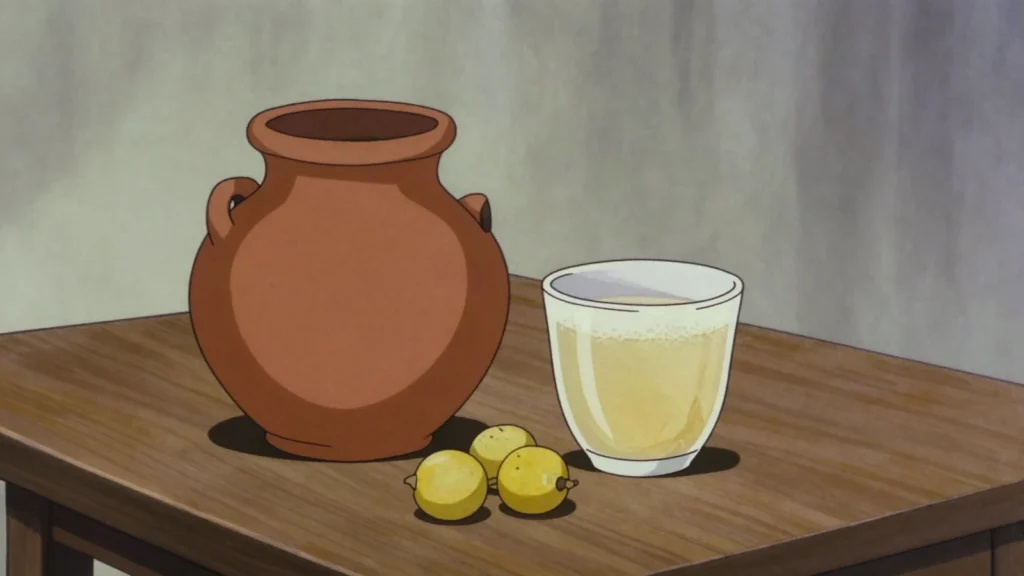
- 6 kgripe marula fruit (canhu), gathered from the ground, yellow and fragrant, about 120 fruits
- 500 mlwarm water, for rinsing the skins
Equipment
- 1large clay pot or food-grade plastic drum, about 8 litres
- 1clean cloth and string, to cover
- 1woven sieve or coarse cloth strainer
- 1gourd (cabaca) or jug, to serve
Directions
- Gather only fruit that has fallen ripe under the tree, yellow and soft with a strong sweet-turpentine smell. Green fruit picked off the branch will not ferment properly and tastes resinous.
- Wash the fruit in cold water, then pinch a small hole in the tough skin of each one with a thumbnail or a knife tip.
- Squeeze each fruit hard over the pot so the pale juice and the slippery flesh run out, leaving the large stone with its clinging pulp behind. This is done by hand and it takes an hour for a batch this size.
- Put the squeezed stones in a bowl, add the warm water and work them with your hands to wash off the last of the pulp, then strain that liquid into the pot too. Discard the stones or crack them later for the oily kernel.
- Strain the juice through a woven sieve or a coarse cloth to take out skin fragments and fibre. You should have 3–4 litres of cloudy, pale yellow juice.
- Cover the pot with a cloth tied down, so air can pass but insects cannot, and leave it in the shade at 25–32°C (75–90°F). The wild yeasts on the fruit skins do the work; nothing is added.
- Within 12 hours it will start to hiss and throw a foam cap. Skim the heaviest foam once a day and taste it as it goes.
- It is ready between 24 and 72 hours, when the sweetness has dropped away, the drink is tart, yeasty and gently fizzy, and the alcohol sits at about 3–5 percent. In hot weather this happens fast.
- Strain it once more and serve it cool from a gourd, poured into cups and passed round. Do not bottle it tightly; it is still fermenting and will build pressure.
- Drink it within two or three days. Left longer it turns to vinegar, which is exactly what the households do with the tail end of a batch.
Technique
- Canhu is strictly seasonal, made in February and March when the marula fruit falls in the south of Mozambique, and the first drinking is a ceremonial event with elders tasting before the community.
- Nothing is added: no sugar, no cultured yeast, no water except the rinse. The sugar in ripe marula is enough, and the yeast lives on the skins, which is why the fruit is never scrubbed hard.
- It cannot be stored. There is no stabilising, no filtering and no sealing, so the whole culture around canhu is built on drinking a batch together within days.
- Marula flesh is exceptionally high in vitamin C, several times that of an orange, which is part of why the fruit mattered so much before the season broke.
Substitutions
- Outside the marula range, the same wild ferment works with very ripe guava, mango or cashew apple, though only cashew apple gives a comparably astringent finish.
- If your kitchen is cooler than 25°C (75°F), the ferment stalls; keep the pot in the warmest spot and expect 4–5 days.
- Commercial marula cream liqueur is a completely different, distilled and sweetened product and is not a substitute for the fresh drink.
Variations
- Ukanyi, the same drink in the Tsonga areas across the border in South Africa and Eswatini.
- Canhu distilled a step further into a clear spirit in some households, though the fresh wine is the traditional form.
- The stones cracked for their oily kernels, eaten as a snack or pressed for marula oil.
History
Southern Mozambique’s Ucanhu ceremony marks the marula harvest; among the Tsonga the first fruits are blessed before the drink may be shared.
Frequently asked questions
What is Canhu?
Canhu is a wine & spirit from Mozambique: marula fruit fermented into a cloudy seasonal wine, drunk in February. Southern Mozambique’s Ucanhu ceremony marks the marula harvest; among the Tsonga the first fruits are blessed before the drink may be shared.
How long does Canhu take to make?
Canhu takes 1 hr 30 min of preparation and 2–3 days fermenting of cooking. The recipe makes about 3 litres, 8 servings. It is rated medium to make.
What can I substitute in Canhu?
Yes, within limits. Outside the marula range, the same wild ferment works with very ripe guava, mango or cashew apple, though only cashew apple gives a comparably astringent finish. If your kitchen is cooler than 25°C (75°F), the ferment stalls; keep the pot in the warmest spot and expect 4–5 days. Commercial marula cream liqueur is a completely different, distilled and sweetened product and is not a substitute for the fresh drink.
What is the most important thing to get right in Canhu?
Strain it once more and serve it cool from a gourd, poured into cups and passed round. Do not bottle it tightly; it is still fermenting and will build pressure.