Pork belly or back cured in salt, often smoked, sliced and fried — the bacon of the English and American breakfast — and its European cousins pancetta, lardons, speck and guanciale, which season the cooking of Italy, France and Central Europe.
Where it comes from
Curing pork in salt is as old as pig-keeping, and the cured belly — fatty, striped, cheap — was the meat of the European peasant through the winter: hung in the chimney to smoke, cut in slices or cubes to flavour beans, cabbage and soup. Britain made it a breakfast in rashers; America made it crisp streaky bacon; Italy made pancetta, the same belly cured with pepper and herbs and rolled or flat, unsmoked, and guanciale, the cured jowl of Roman carbonara and amatriciana. Germany and the Tyrol smoke it into Speck; France cuts it into lardons.
Bacon in a pan does two things: it renders its fat, which becomes the cooking medium for whatever follows, and it browns into savoury, salty, smoky crispness. That is why it starts so many dishes — a coq au vin, a carbonara, a pot of beans, a Brussels sprout, a clam chowder — where a little bacon fat and a few browned cubes season the whole. Most modern bacon is wet-cured by injection and cooks with a spitting of water; dry-cured bacon, rubbed with salt and left, is firmer, saltier and better.
Varieties
- Streaky bacon (American bacon) — Pork belly, cured and usually smoked, sliced thin; fatty and crisp when fried.
- Back bacon — Loin with a strip of belly; leaner, meatier; the British rasher.
- Pancetta — Italian belly, cured with salt, pepper and spices, unsmoked; rolled (arrotolata) or flat (tesa). Diced for pasta, soups and braises.
- Guanciale — Cured pork jowl; more fat, deeper flavour. The correct pork for carbonara, amatriciana and gricia.
- Lardons and speck — French cubed bacon for salads and stews; Tyrolean juniper-smoked belly, sliced thin or diced.
- Salt pork and fatback — Unsmoked cured belly or back fat; the seasoning pork of New England beans and Southern greens.
In the kitchen
Start it in a cold pan over medium heat and let the fat render slowly; the bacon crisps evenly and the fat is clean. Pour off and keep the fat — it fries eggs, potatoes and greens better than anything. For a dish, dice pancetta or bacon and cook it first until golden, then build on it: the onions for a ragù, the mushrooms for a coq au vin, the beans and cabbage of a soup.
Guanciale rendered slowly is the fat that carbonara’s egg and pecorino emulsify into; pancetta wrapped around a roast bastes it; a rasher over a bird’s breast keeps it moist. Bacon is salt — season the dish after it, not before. Bake rashers on a rack in the oven at 200°C for flat, even, crisp bacon in quantity.
Choosing and keeping
Dry-cured bacon and pancetta are worth the premium: firmer, less watery, better flavoured. Both keep a week or two in the fridge wrapped, longer vacuum-packed; a whole piece of pancetta or guanciale keeps for weeks and can be cut as needed. Bacon freezes well, separated by paper.
Slimy, grey or sour-smelling bacon is off. Guanciale is sold by Italian delis and good butchers and is increasingly available; pancetta is not a substitute in flavour but is in function.
Dishes with bacon
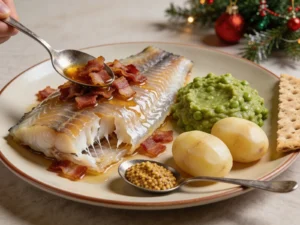 LutefiskLye-treated dried cod, translucent, with bacon and peas; Christmas.
 Drob de mielEaster lamb offal loaf with herbs and eggs
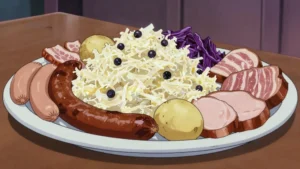 Choucroute garnieFermented cabbage braised in wine with sausages, bacon and salted pork.
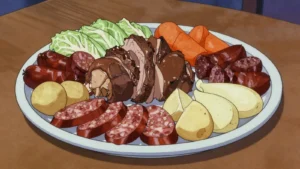 Cozido à portuguesaboiled dinner of meats, sausages, cabbage, potatoes
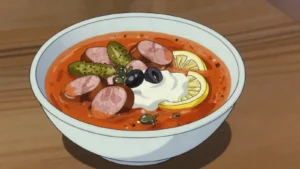 Solyankasour-salty soup of meats, pickles, olives, lemon
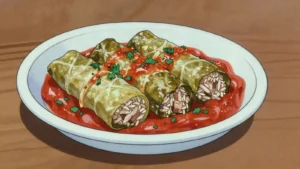 GołąbkiCabbage leaves rolled around pork and rice, tomato sauce.
 PīrāgiCrescent yeast buns stuffed with smoked bacon and onion.
 Full Irish breakfastBacon, sausages, eggs, black and white pudding, toast.
Bacon and the cured pork bellies is tagged on 128 dishes from 56 countries in the atlas. These notes are written from general knowledge and carry no per-fact citation — see About.