The meat of the world’s most widespread livestock — lean, slightly sweet, faintly gamey goat, and the deep, fatty flavour of mature sheep — the everyday meats of the Caribbean, Africa, South Asia and the Middle East, and the great slow-braising meats.
Where it comes from
Goats were domesticated in the Zagros mountains ten thousand years ago and thrive where cattle cannot — on scrub, rock and drought — which is why goat is the most eaten red meat in the world by number of animals and the meat of the poor and the mountain across Africa, the Middle East, South Asia, the Caribbean and Latin America. Curry goat is Jamaica’s celebration dish; birria is Mexico’s; the Indian ‘mutton’ curry is almost always goat; Nigerian pepper soup, Greek and Italian roast kid at Easter, Middle Eastern mansaf all rest on it.
Mutton is the meat of a sheep more than about two years old, where lamb is under one; it is darker, fattier, stronger and needs long, slow cooking, and it was the meat of Britain, Ireland, Central Asia and the Middle East until the twentieth century pushed lamb in its place. It is coming back for its flavour. Kid — young goat — is tender enough to roast; older goat, like mutton, wants hours in a pot. Both are usually cooked on the bone, which gives the sauce its body.
Varieties
- Kid (young goat, capretto, cabrito) — Under a year; pale, tender, delicate. Roasted whole or in joints — Italian, Greek, Spanish, Mexican.
- Goat (chevon, mature) — Lean, darker, with more flavour; needs slow braising or stewing. Curry goat, birria, Indian curries, Nigerian and Kenyan stews.
- Mutton — Sheep over two years; dark, fatty, full-flavoured. For slow braises, Lancashire hotpot, Irish stew, Central Asian plov, Middle Eastern stews.
- Hogget — Sheep between one and two years; between lamb and mutton in flavour and tenderness. The best of both, rarely labelled.
- Goat shoulder and leg — The braising joints, bone-in, cut into chunks across the bone by Caribbean and Indian butchers.
- Goat’s milk and cheese — The other product — see the cheese pages; goat’s milk is the dairy of the Mediterranean hills.
In the kitchen
Marinate goat or mutton overnight — with yoghurt and spices in India, with allspice, thyme, Scotch bonnet and spring onion in Jamaica, with vinegar, garlic and chilli for birria — then brown it hard and braise it slowly, covered, for two or three hours, until it falls from the bone. It cannot be hurried; undercooked goat is tough and a rolling boil toughens it further. Bone-in chunks give the best sauce.
Kid is different: young and tender, it roasts like lamb — with garlic, rosemary and potatoes in Italy, with lemon and oregano in Greece — or grills in chops. Mutton’s fat is strong; trim some, and pair the meat with acid or sharpness — capers, vinegar, redcurrant, mint, sour cherry — and with the spices of the regions that love it.
Choosing and keeping
Buy from Caribbean, African, Halal and Indian butchers, where goat is an everyday meat, cut on the bone into stewing pieces; ask for young goat for roasting. Good goat is pinkish-red with white fat and a clean, faintly sweet smell. It keeps two or three days refrigerated and freezes well.
Mutton is sold by specialist butchers and some farmers’ markets; hogget more rarely. Both improve with a day or two in a marinade and are better cooked ahead and reheated.
Dishes with goat
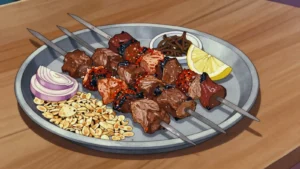 SekuwaChar-grilled skewered meat marinated in Nepali spices
 Yarmacracked wheat porridge cooked slowly with lamb
 Conch frittersBattered conch balls with spicy dipping sauce
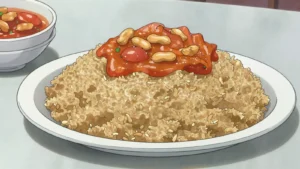 Wassa-wassaSteamed couscous of dried yam flour, eaten with peanut sauce or stew
 Country chopmixed greens, meat and fish cooked down together in palm oil, over rice
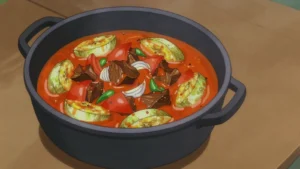 Agatogoplantains stewed with meat or tripe and vegetables in one pot
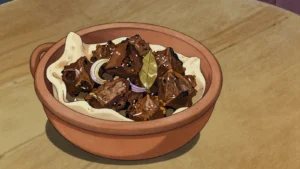 Govurdakmutton chunks fried in tail fat, preserved for winter
 Cassava leaffinely pounded cassava leaves with palm oil, meat and dried fish
Goat and mutton is tagged on 179 dishes from 94 countries in the atlas. These notes are written from general knowledge and carry no per-fact citation — see About.