The young onion pulled before it bulbs — scallion in America, green onion, salad onion — mild enough to eat raw, and the fresh green allium of Chinese, Japanese, Korean, Mexican and Middle Eastern cooking.
Where it comes from
Spring onions are ordinary onions harvested young, or bunching varieties bred never to bulb; the terms scallion, green onion, salad onion and spring onion all mean roughly the same slim white-and-green stalk, though Welsh onions and Japanese negi are perennial bunching types with thicker stems. They are among the oldest cultivated vegetables in China, where the green onion, cong, is one of the three founding aromatics of the kitchen with ginger and garlic.
They are two ingredients in one. The white and pale green base is a mild onion, used raw or cooked from the start of a dish; the dark green tops are a herb, sliced fine and scattered raw at the end for freshness and colour. Chinese cooking uses whole lengths in braises and stir-fries and fine rings as a garnish; Mexican cooking grills them whole; British cooking chops them raw into salads and mashed potato.
Varieties
- Spring onion / scallion — Slim, white base, hollow green tops. The everyday kind, raw or cooked.
- Salad onion — Slightly bulbed young onion, sold in bunches; milder, sweeter.
- Negi (Japanese bunching onion) — Long, thick, leek-like, with a large white portion; grilled, in miso soup and with sukiyaki.
- Welsh onion (ciboule) — A perennial bunching onion with hollow leaves; the European garden type.
- Cebolleta / cebollita — Mexican spring onions with small bulbs, grilled whole beside carne asada.
- Chinese chives (garlic chives) — A different allium — flat leaves with a garlic flavour — used like spring onion greens in dumplings and stir-fries.
In the kitchen
Use the whites where you would use onion — sliced into a stir-fry with ginger and garlic at the start, or softened in butter — and the greens where you would use a herb, sliced thin across and added at the end. Whole spring onions grilled or charred until sweet and soft are a Mexican, Catalan (calçots) and Japanese dish in themselves.
Slice on the diagonal for looks; in fine rings for garnish. Cut lengthways into fine threads and dropped in iced water they curl — the classic garnish for Cantonese steamed fish. The green tops wilt in seconds in hot oil and should not be cooked long.
Choosing and keeping
Firm, white, unblemished bases with crisp dark green tops; avoid slime or yellowing. In a glass of water in the fridge, or wrapped damp, they keep a week or more; the roots will even regrow in water for a second cutting.
Do not freeze them raw — they turn slimy. Sliced greens can be dried briefly and frozen for cooked dishes.
Dishes with spring onion
 Pleah Sach KoThin raw beef cured in lime juice with herbs, shallot and roasted rice powder
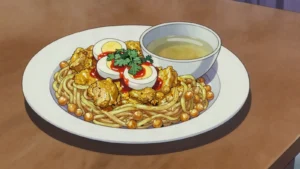 Nangyi ThokeThick rice noodles hand-mixed with chicken, chickpea flour and chili oil
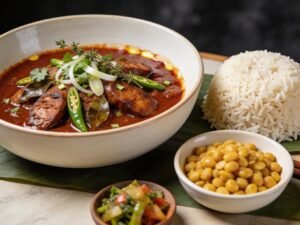 RougailleCreole tomato, onion and thyme sauce with sausage, fish or prawns
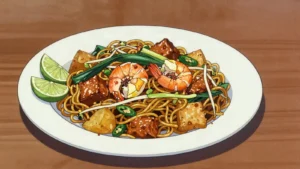 Mee Goreng MamakIndian-Muslim fried yellow noodles, sweet-spicy with tofu and potato
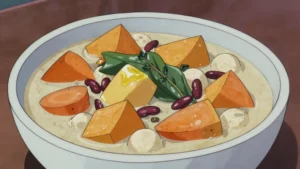 Ital stewSaltless vegan stew of coconut milk, vegetables and dumplings
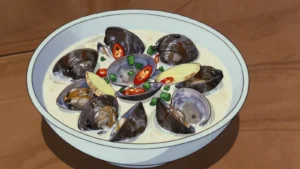 NgduulMangrove clams simmered in coconut milk, esteemed traditional food
 Torrejitas de maíz nuevoFritters of freshly ground young corn, fried and eaten with cheese
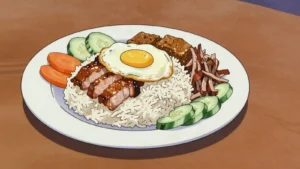 Com TamSaigon broken rice with grilled pork chop, egg and pork skin
Spring onion is tagged on 444 dishes from 120 countries in the atlas. These notes are written from general knowledge and carry no per-fact citation — see About.