Marine algae eaten as a vegetable, and the food in which glutamate was first identified — which makes it the origin of the whole idea of umami.
Where it comes from
Seaweed is a staple in Japan, Korea and China, and is eaten around the coasts of Ireland, Wales, Iceland, Chile and the Pacific islands. It is farmed on ropes and nets on a very large scale in East Asia.
In 1908 a Japanese chemist isolated glutamate from kombu and named the taste umami. Dashi — kombu simmered with dried bonito — is the base of Japanese cooking and works because the glutamate in the kelp and the inosinate in the fish multiply each other’s effect rather than simply adding.
Varieties
- Kombu — Thick kelp, dried. Never boiled hard — it goes bitter and slimy. The backbone of dashi.
- Nori — Pressed into sheets. Toasted, wrapped around sushi and rice balls, crumbled over noodles.
- Wakame — Softens in minutes into silky green fronds. Miso soup, salads.
- Dulse — North Atlantic, reddish, eaten dried as a snack in Ireland and Iceland. Faintly bacony when fried.
- Laver — The seaweed of Welsh laverbread, boiled for hours to a purée.
- Hijiki — Black, firm, and it accumulates inorganic arsenic — eaten in small amounts, and avoided by some authorities altogether.
- Agar and carrageenan — Extracted gelling agents rather than vegetables. Agar sets firmer than gelatine and does not melt in the mouth.
In the kitchen
Kombu goes into cold water and comes out just before the boil. Boiling it produces the slime and bitterness that put people off dashi.
Nori loses its crispness the moment it meets moisture, which is why a hand roll is assembled at the table and a sushi roll is not.
Dishes with seaweed
 NamaFresh sea grapes seaweed served with coconut and lemon
 Sago’t GulamanBrown sugar and pandan water with tapioca pearls and cubes of jelly
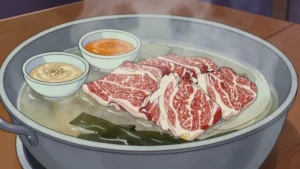 Shabu-shabuPaper-thin beef swished through kombu broth, dipped in ponzu or sesame
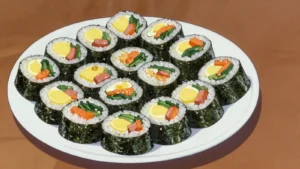 KimbapSeaweed rice rolls with pickled radish, egg and vegetables, picnic staple
 DulseSun-dried purple seaweed eaten straight from the bag, salty and chewy
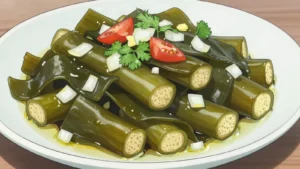 CochayuyoDried bull kelp, soaked and cooked into salads and stews
 Irish mossThick sweet drink of sea moss blended with milk, spices and vanilla
 Kyauk KyawFirm coconut-milk jelly set with agar and cut into cool white squares
Seaweed is tagged on 18 dishes from 20 countries in the atlas. These notes are written from general knowledge and carry no per-fact citation — see About.