
Ingredients
Butter
- 1 litredouble cream, from grass-fed herds if you can get it
- 2 tbsplive cultured buttermilk or plain yoghurt, for the cultured version
- 1 tspfine sea salt
- iced water, for washing
To serve
- soda bread
- boiled potatoes
Directions
- For cultured butter, stir the buttermilk into the cream, cover, and leave at room temperature for 12 hours until it smells faintly nutty and sour. This ripening is what gives Irish butter its depth; skip it and you get sweet cream butter, which is good but plainer.
- Chill the ripened cream thoroughly to about 12°C (54°F). Too warm and the butter comes greasy; too cold and it takes forever to break.
- Churn in a stand mixer, a food processor or a jar you shake. It will go through whipped cream, then stiff and grainy, and then quite suddenly separate into yellow grains and thin buttermilk. That break happens within seconds — watch for it.
- Strain off the buttermilk and keep it. It is the real thing, and it is what soda bread wants.
- Now wash the butter: put the grains in a bowl of iced water and press and fold them with a spatula, pouring off the cloudy water and repeating with fresh water until it runs completely clear.
- This washing is the step people skip and it is the one that matters. Buttermilk left in the butter turns it rancid within days; washed properly, it keeps for weeks.
- Work in the salt, then press the butter into a block or roll it in greaseproof paper, squeezing out any remaining water.
- Chill. The yellow colour comes from beta-carotene in fresh grass, which is why Irish butter is darker in summer than in winter.
Technique
- Wash until the water runs clear. Not almost clear — clear.
- Watch for the break. It goes from whipped cream to butter and buttermilk in a matter of seconds and overshooting makes a mess.
- The buttermilk that comes off is genuine churn buttermilk, thinner and less sour than the cultured kind sold in cartons, and it is excellent in bread.
Substitutions
- Plain double cream without the culture for sweet cream butter.
- Live yoghurt in place of buttermilk as the culture.
- Flaky sea salt worked in at the end for a coarser finish.
Variations
- Bog butter — butter buried in peat — is an archaeological curiosity rather than a recipe; some casks recovered are over two thousand years old.
- Worked with garlic and herbs, or with seaweed, both of which Irish dairies now sell.
History
Butter buried in peat bogs, some over two thousand years old, is still dug up; the Kerrygold export brand was created in 1962.
Frequently asked questions
What is Irish butter?
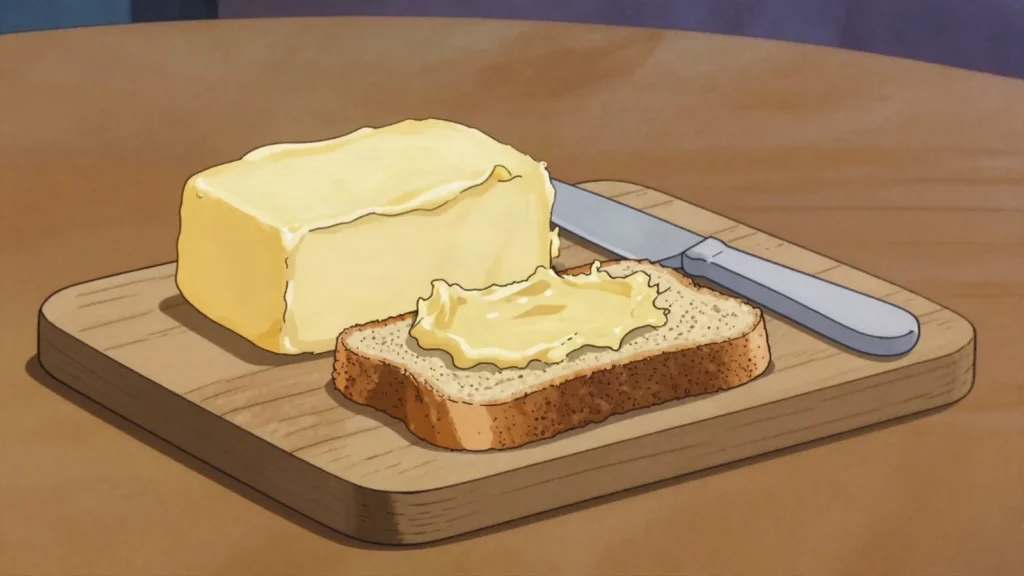
Irish butter is a cheese & dairy from Ireland: deep yellow butter from grass-fed herds, salted and spread thickly. Butter buried in peat bogs, some over two thousand years old, is still dug up; the Kerrygold export brand was created in 1962.
How long does Irish butter take to make?
Irish butter takes 20 min plus 12 hours ripening of preparation and no cooking at all. The recipe makes makes about 400 g plus 600 ml buttermilk. It is rated easy to make.
What can I substitute in Irish butter?
Yes, within limits. Plain double cream without the culture for sweet cream butter. Live yoghurt in place of buttermilk as the culture. Flaky sea salt worked in at the end for a coarser finish.
What is the most important thing to get right in Irish butter?
Chill. The yellow colour comes from beta-carotene in fresh grass, which is why Irish butter is darker in summer than in winter.