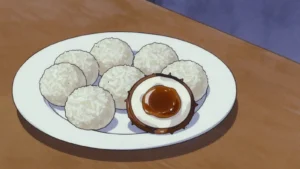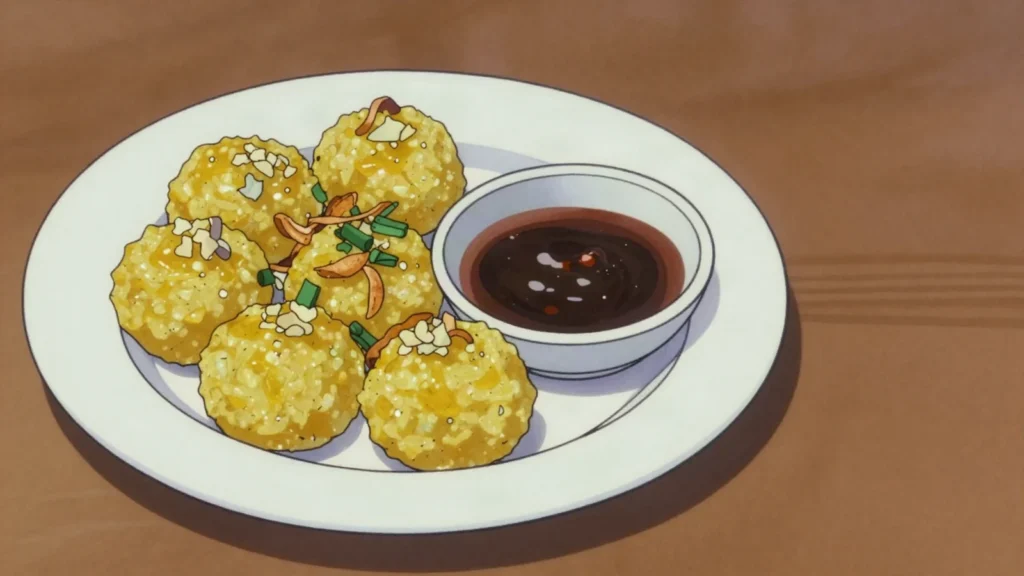

Shan sour rice kneaded with fish or potato and turmeric, pressed into balls and served cold with garlic oil and crisp shallots. It appears at ceremonies and funerals, and the sourness is the point.
It rests on deliberately souring cooked rice at room temperature for a day — cooked rice held warm is the classic Bacillus cereus setting, and the traditional practice depends on the acidity arriving fast enough to protect it.
What goes into it
- cooked rice
- fish, or potato
- turmeric
- tomato
- garlic oil and crisp shallots to finish
How it is made
Cooked rice is left in a covered vessel for a day or more to sour with lactic bacteria, then kneaded hard with cooked fish or mashed potato, turmeric and tomato until the mixture binds. It is pressed into balls and served cold, dressed with garlic oil.
How long it takes: a day or more of souring, then assembling
How it is eaten
Cold in balls with garlic oil, crisp shallots, chives and a tamarind dip, at ceremonies.
History
Shan and Kachin dish of lightly fermented rice served cold with garlic oil and crisp shallots at ceremonies and funerals.
Frequently asked questions
What is Htamin Jin?
Htamin Jin is a fermented & pickled from Myanmar: shan sour rice kneaded with fish or potato and turmeric, pressed into balls. Shan and Kachin dish of lightly fermented rice served cold with garlic oil and crisp shallots at ceremonies and funerals.
How is Htamin Jin made?
Cooked rice is left in a covered vessel for a day or more to sour with lactic bacteria, then kneaded hard with cooked fish or mashed potato, turmeric and tomato until the mixture binds. It is pressed into balls and served cold, dressed with garlic oil. It takes a day or more of souring, then assembling.
Can I make Htamin Jin at home?
No, and the atlas gives no method for it. It rests on deliberately souring cooked rice at room temperature for a day — cooked rice held warm is the classic Bacillus cereus setting, and the traditional practice depends on the acidity arriving fast enough to protect it.
What goes into Htamin Jin?
Cooked rice, fish, or potato, turmeric, tomato, garlic oil and crisp shallots to finish.
How is Htamin Jin eaten?
Cold in balls with garlic oil, crisp shallots, chives and a tamarind dip, at ceremonies.