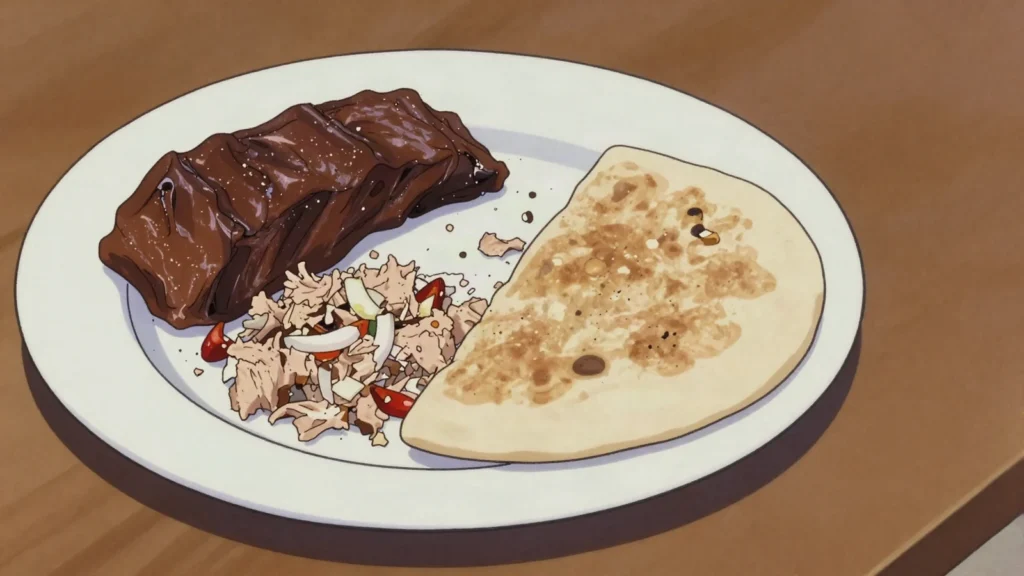

Skipjack tuna boiled, smoked and sun-dried into blocks hard as wood, then shaved into dishes. It is the Maldives’ oldest export, traded to Sri Lanka and India for centuries as Maldive fish, and island households still make it.
It needs a continuous husk-fired smoking rack and days of equatorial sun to reach the dryness that preserves it; a partial version is perishable, and the Maldives sells it dried everywhere.
What goes into it
- skipjack tuna, filleted
- salt water
- coconut husk and wood for smoke
- sun
How it is made
The tuna is cut into loins and boiled in salted water, then laid on racks over smoky coconut-husk fires for a day or more, and finally dried in full sun for days until the pieces are rock hard and rattle. The three stages together — cooking, smoking, drying — are what let it keep for a year in a tropical climate without refrigeration.
How long it takes: several days to a week across boiling, smoking and drying
How it is eaten
Grated or pounded into mas huni, curries and sambols, where it seasons the whole dish.
History
The Maldives’ oldest export, traded to Sri Lanka and India for centuries as Maldive fish and still made by island households.
Frequently asked questions
What is Hikimas?
Hikimas is a charcuterie & cured from Maldives: skipjack tuna boiled, smoked and sun-dried into hard blocks, shaved into dishes. The Maldives’ oldest export, traded to Sri Lanka and India for centuries as Maldive fish and still made by island households.
How is Hikimas made?
The tuna is cut into loins and boiled in salted water, then laid on racks over smoky coconut-husk fires for a day or more, and finally dried in full sun for days until the pieces are rock hard and rattle. The three stages together — cooking, smoking, drying — are what let it keep for a year in a tropical climate without refrigeration. It takes several days to a week across boiling, smoking and drying.
Can I make Hikimas at home?
No, and the atlas gives no method for it. It needs a continuous husk-fired smoking rack and days of equatorial sun to reach the dryness that preserves it; a partial version is perishable, and the Maldives sells it dried everywhere.
What goes into Hikimas?
Skipjack tuna, filleted, salt water, coconut husk and wood for smoke, sun.
How is Hikimas eaten?
Grated or pounded into mas huni, curries and sambols, where it seasons the whole dish.