
Ingredients
Cream
- 500 mldouble cream, not ultra-pasteurised
- 2 tbspcultured buttermilk, or 2 tbsp live crème fraîche
To serve
- spooned into sauces and soups
- or with fruit and sugar
Directions
- Warm the cream to 24°C (75°F) — barely warm to the touch. Crème fraîche is set by a mesophilic culture that works at room temperature, and heating it to yoghurt temperature kills exactly what you want.
- Stir in the buttermilk thoroughly.
- Pour into a clean jar, cover with a cloth rather than a lid, and leave at room temperature for 18 to 24 hours.
- It is ready when it has thickened noticeably and smells faintly nutty and sour. It will still be pourable at this stage — it does most of its thickening in the fridge.
- Seal and refrigerate for at least six hours, after which it should be thick enough to hold a spoon.
- It keeps two weeks in the fridge, and thickens and sharpens as it goes. Keep two tablespoons back to culture the next batch.
- Use it wherever cream would split: crème fraîche can be boiled in a sauce without curdling, because culturing has already coagulated the protein.
Technique
- Not ultra-pasteurised. UHT cream has been heated hard enough that the culture cannot set it properly, and it stays thin however long you wait.
- The reason to make it rather than use soured cream is heat stability. Sour cream splits in a hot pan; crème fraîche does not.
- Room temperature, not warm. Above 30°C (86°F) the culture sours it fast and it tastes sharp rather than nutty.
Substitutions
- Live sour cream as a starter, which carries the same cultures.
- A mesophilic starter culture from a dairy supplier for a more consistent result.
Variations
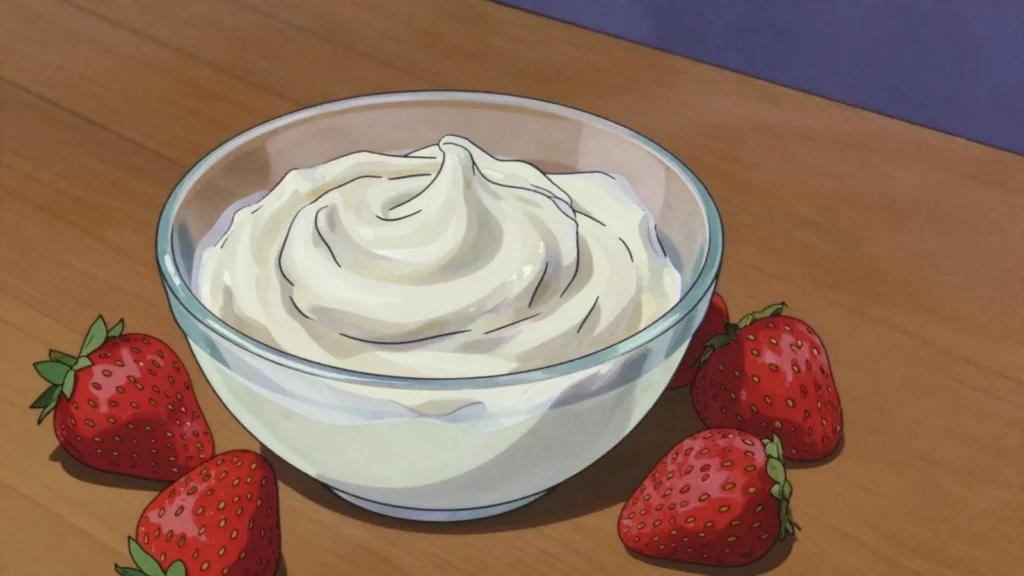
- Whipped, it holds soft peaks and is served with fruit and sugar.
- Isigny crème fraîche is an AOC product from Normandy; this is the household method, not the protected cream.
History
Normandy’s crème fraîche d’Isigny holds AOC status; culturing thickens the cream while keeping it stable in heat.
Frequently asked questions
What is Crème fraîche?
Crème fraîche is a cheese & dairy from France: thick cultured cream, spooned into sauces without curdling. Normandy’s crème fraîche d’Isigny holds AOC status; culturing thickens the cream while keeping it stable in heat.
How long does Crème fraîche take to make?
Crème fraîche takes 5 min plus 24 hours culturing of preparation and 5 min of cooking. The recipe makes makes 500 ml. It is rated easy to make.
What can I substitute in Crème fraîche?
Yes, within limits. Live sour cream as a starter, which carries the same cultures. A mesophilic starter culture from a dairy supplier for a more consistent result.
What is the most important thing to get right in Crème fraîche?
Pour into a clean jar, cover with a cloth rather than a lid, and leave at room temperature for 18 to 24 hours.