
Ingredients
Tapping
- 1coconut palm with unopened flower spathes, in bearing
- 1strip of coconut leaf or soft cord, to bind the spathe
- 1very sharp toddy knife, kept honed
- 1clean bottle, gourd or coconut shell, with a cord to hang it
- Boiling water and a clean cloth, to sterilise the container daily
To drink fresh
- 1 litrefresh sweet toddy, strained
- Ice, if you have it
To ferment
- 1 litrefresh toddy
- 1covered clay pot or loosely capped bottle
To boil down
- 2 litresfresh toddy, for about 250 ml of dark palm syrup
Directions
- Slice a thin sliver, a millimetre or two, off the tip of the bound spathe with the sharp knife.
- Tie the clean container under the cut so the sap drips straight in, and leave it. Climb and cut again twice a day, morning and evening, taking a fresh paper-thin slice off the tip each time.
- Strain the collected sap through a clean cloth. Fresh sweet toddy is milky, cool, faintly yeasty and about as sweet as fruit juice.
- Taste every few hours; in tropical heat this moves fast. To preserve it instead, boil the fresh sap in a wide pan over medium heat for 2–3 hours, skimming, until it reduces to a thick dark syrup the consistency of treacle.
- Serve fresh toddy cold in a cup or straight from a coconut shell; serve the fermented one the same day it turns.
Technique
- Toddy cutting is a specialist skill in Nauru, learned young, and it mattered enormously in the phosphate era and again during the wartime famine, when toddy was among the few reliable sources of sugar, vitamin C and B vitamins on the island.
- The daily thin slice is the whole technique. Cut too deep and the spathe dies; miss a session and the wound seals and the flow stops.
- Container hygiene decides whether you get sweet toddy or sour. Sterilise with boiling water at every collection, and collect in the cool of the morning if you want it sweet.
- There is no clean line between the fresh drink and the alcoholic one; it is the same liquid at different hours, which is why it is always described by how long since it was cut.
Substitutions
- No palm to tap: bottled fresh coconut sap or coconut nectar from a Southeast Asian grocer, kept refrigerated, is the closest thing, and it will ferment the same way if left warm.
- Palm sugar or jaggery dissolved in water gives an approximation of the boiled-down syrup, though without the smoky note.
- Nipa palm and toddy palm sap are tapped identically across the Pacific and Asia and can be used in exactly the same ways.
Variations
- Sweet morning toddy, drunk within hours of cutting, the everyday form.
- Kamaimai-style boiled toddy syrup, the storable version made across Kiribati and Nauru.
- Sour toddy left two days, drunk as a mild alcoholic drink.
History
Tapped twice daily from bound flower spathes on the outer atolls, where it substitutes for scarce fresh water.
Frequently asked questions
What is Coconut Toddy?
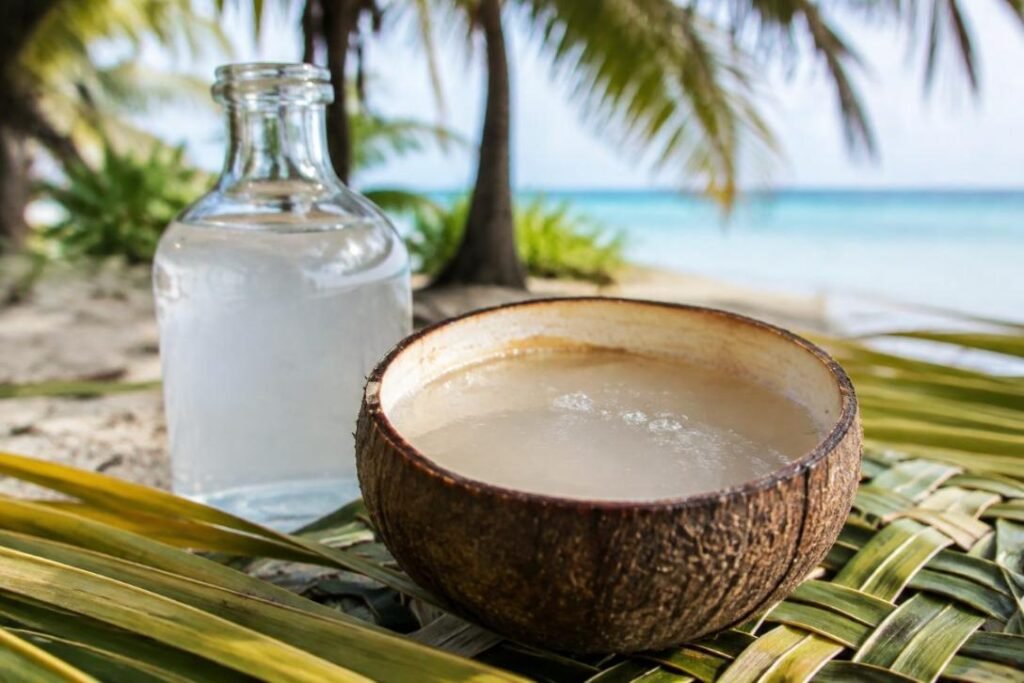
Coconut Toddy is a drink from Micronesia: fresh sweet palm sap drunk unfermented, cool from the morning cut. Tapped twice daily from bound flower spathes on the outer atolls, where it substitutes for scarce fresh water.
How long does Coconut Toddy take to make?
Coconut Toddy takes 20 min a day of tapping of preparation and Fresh, or 24–48 hr to ferment of cooking. The recipe makes about 1.5 litres a day from one palm. It is rated medium to make.
What can I substitute in Coconut Toddy?
Yes, within limits. No palm to tap: bottled fresh coconut sap or coconut nectar from a Southeast Asian grocer, kept refrigerated, is the closest thing, and it will ferment the same way if left warm. Palm sugar or jaggery dissolved in water gives an approximation of the boiled-down syrup, though without the smoky note. Nipa palm and toddy palm sap are tapped identically across the Pacific and Asia and can be used in exactly the same ways.
What is the most important thing to get right in Coconut Toddy?
The daily thin slice is the whole technique. Cut too deep and the spathe dies; miss a session and the wound seals and the flow stops.