
Ingredients
Millet
- 600 gmillet flour, coarsely milled
- about 250 ml water
- 1 tspsalt
To serve
- a sauce such as domoda or superkanja
- or soured milk and sugar, as a sweet version
Equipment
- a couscoussier, or a woven basket steamer over a pot
To serve
- from a communal bowl, eaten with the right hand
Directions
- Sprinkle water over the millet flour a very little at a time. Never pour the water in, and add it in the smallest sprinkles. Rub the flour between your palms constantly as you add water, in a circular motion.
- Rub the flour in a circular motion between your palms or against the side of a wide bowl. That rolling is what forms the grains, and it takes practice to do well.
- Squeeze a handful: it should hold briefly and then break apart into separate grains. If it stays in a solid lump it is too wet, and if nothing forms it is too dry.
- Set the grains in a woven basket or a couscoussier over a pot of boiling water or over the stew itself. Steaming it over the stew means the grains take up the aroma of the sauce, which is traditional.
- Steam the grains for twenty minutes. Turn the grains out into a wide bowl and break up all the clumps with a fork or oiled hands. Sprinkle over a little more water and salt, and rub the grains through your hands again. Let them rest for ten minutes, then steam again for twenty minutes.
- Repeat once more if you have time, which gives the lightest result. Bite one: it should be tender all through with no chalky raw centre.
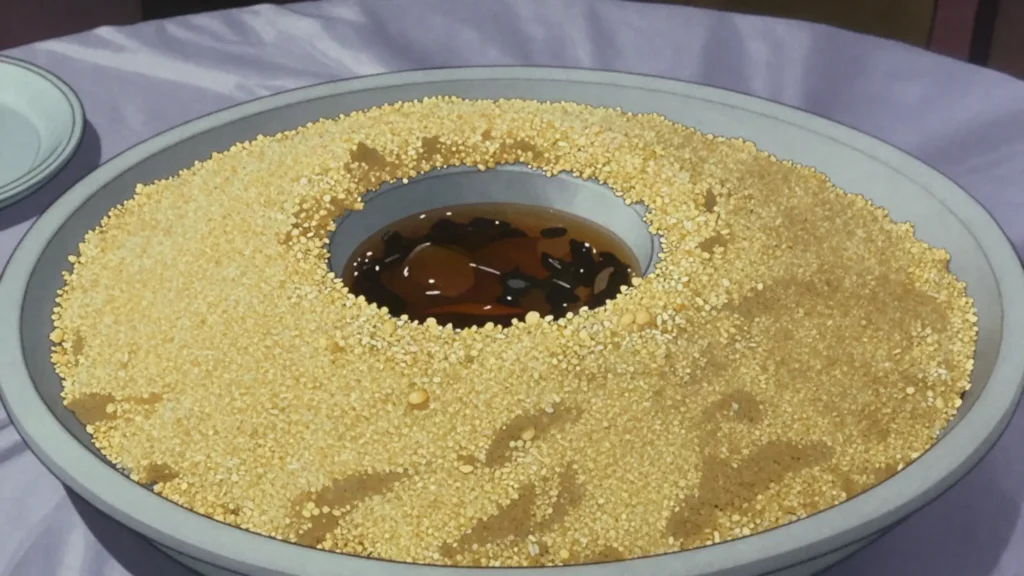
- Turn it out and fluff it thoroughly with a fork, breaking every clump. A little oil or butter rubbed through keeps the grains separate. Serve it from a large communal bowl, with the sauce poured into the middle. It keeps a day and it is resteamed to reheat.
Technique
- The method is essentially couscous, rolling raw flour into grains.
- It is steamed three times with breaks, which is what makes it light.
- It is eaten with a savoury sauce or with soured milk and sugar.
Substitutions
- Ready-made millet couscous, which is sold in African shops.
- Wheat couscous, though the flavour is quite different.
Variations
- With soured milk and sugar, as a sweet supper.
- With domoda, the groundnut sauce.
- Made with a mixture of millet and sorghum.
History
Millet was the Gambian staple before imported rice; the grain is moistened, rolled and steamed in a woven basket over the stew pot.
Frequently asked questions
What is Chereh?
Chereh is a main from Gambia: steamed millet couscous eaten with sauce or with soured milk. Millet was the Gambian staple before imported rice; the grain is moistened, rolled and steamed in a woven basket over the stew pot.
How long does Chereh take to make?
Chereh takes 40 min of preparation and 1 hr of cooking. The recipe makes 6 servings. It is rated hard to make.
What can I substitute in Chereh?
Yes, within limits. Ready-made millet couscous, which is sold in African shops. Wheat couscous, though the flavour is quite different.
What is the most important thing to get right in Chereh?
Sprinkle water over the millet flour a very little at a time. Never pour the water in, and add it in the smallest sprinkles. Rub the flour between your palms constantly as you add water, in a circular motion.