
Ingredients
Chapati
- 2chapatis, freshly made or day-old
Beans
- 400 gcooked red or brown beans
- 1onion, chopped
- 2tomatoes, chopped
- 2 tbspoil
- 1 tspcurry powder, optional
- salt
To finish
- chopped coriander
- chilli sauce
To serve
- newspaper or a paper cone
Directions
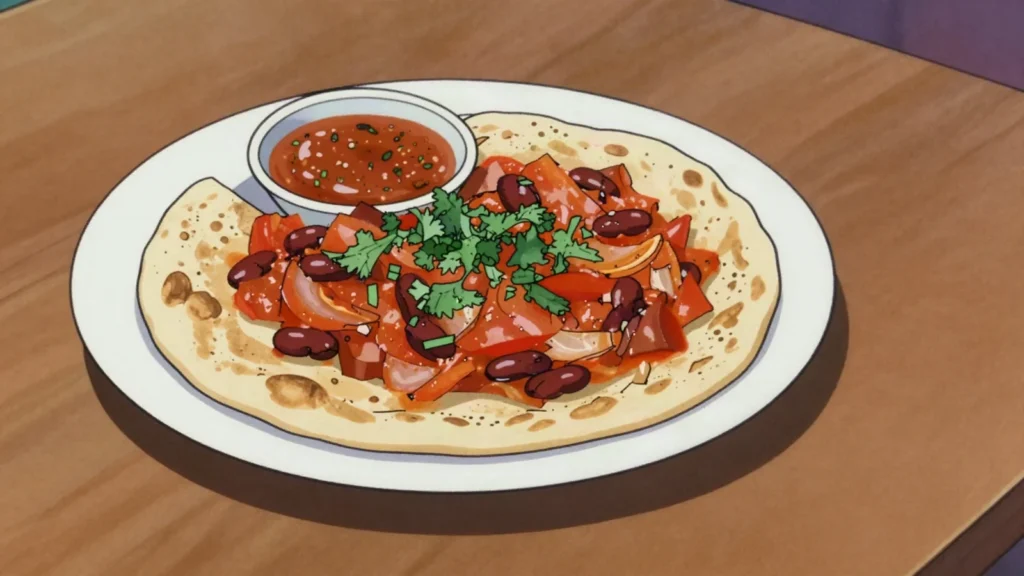
- Fry the onion in the oil until soft and golden, then add the tomatoes and cook them down for 8 minutes.
- Add the cooked beans with a splash of their liquid and simmer for 10 minutes, mashing some against the side of the pan.
- Mash a portion of the beans. It thickens the mixture so it clings to the chapati strips rather than sitting in a puddle at the bottom.
- Season and keep it thick, not soupy.
- Stack the chapatis and slice them into ribbons about 1 cm wide.
- Cut the chapati rather than serving it whole. The strips are what make it kikomando, and it is eaten with the fingers from paper.
- Toss the chapati ribbons through the hot beans in the pan for about 30 seconds, just enough to coat and warm them.
- Thirty seconds and no longer. Left in the beans the strips go limp and the whole thing turns to paste.
- Scatter coriander over and add chilli sauce.
- Serve immediately in newspaper or a paper cone, eaten with the fingers.
- It is cheap student and worker food across Kampala, sold from the same stalls that make chapati, and it is assembled in seconds.
- The name is Kampala street slang and the story usually given is that it is quick and hits hard, though nobody agrees on the origin.
Technique
- Day-old chapati works better than fresh, because it holds its shape when tossed.
- It is one of the cheapest hot meals available in Kampala and it is genuinely filling.
- A fried egg on top makes it a rolex-adjacent meal and is a common upgrade.
Substitutions
- Tinned beans, drained, which is what a home cook would use.
- Any flatbread cut into strips.
Variations
- With a fried egg through it.
- With avocado, which is a common addition.
- Katogo, the related Ugandan mixed one-pot.
History
A Kampala workers’ meal named after action-film commandos, built for filling stomachs at the lowest possible price.
Frequently asked questions
What is Kikomando?
Kikomando is a street food from Uganda: chapati sliced into ribbons and tossed with fried beans, eaten from paper. A Kampala workers’ meal named after action-film commandos, built for filling stomachs at the lowest possible price.
How long does Kikomando take to make?
Kikomando takes 10 min of preparation and 15 min of cooking. The recipe makes 2 servings. It is rated easy to make.
What can I substitute in Kikomando?
Yes, within limits. Tinned beans, drained, which is what a home cook would use. Any flatbread cut into strips.
What is the most important thing to get right in Kikomando?
Mash a portion of the beans. It thickens the mixture so it clings to the chapati strips rather than sitting in a puddle at the bottom.