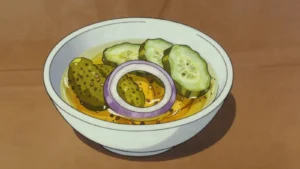

Almond-shaped purple olives from Messenia around Kalamata, cured in brine and finished with vinegar, salty and fruity. The name has been protected in the European Union since 1996, and only olives from the designated area may carry it.
The name is a protected designation of origin limited to Messenia, and the cure runs for months at a salt concentration and final acidity fixed by standard rather than by taste.
What goes into it
- Kalamon olives, picked ripe
- salt brine
- red wine vinegar
- olive oil
How it is made
The olives are slit or lightly cracked so the brine can reach the flesh, then held in a salt brine for weeks to months while the bitter oleuropein leaches out and lactic bacteria acidify the liquid. They are then packed in fresh brine with vinegar and a film of oil on top. The brine strength and the acidity at the end are both fixed by the standard.
How long it takes: two to six months of brining
How it is eaten
With feta and tomato in a Greek salad, in bread, or on their own with ouzo.
History
Grown in Messenia around Kalamata and protected by name since 1996 within the European Union.
Frequently asked questions
What is Kalamata olives?
Kalamata olives is a fermented & pickled from Greece: almond-shaped purple olives cured in brine and vinegar, salty and fruity. Grown in Messenia around Kalamata and protected by name since 1996 within the European Union.
How is Kalamata olives made?
The olives are slit or lightly cracked so the brine can reach the flesh, then held in a salt brine for weeks to months while the bitter oleuropein leaches out and lactic bacteria acidify the liquid. They are then packed in fresh brine with vinegar and a film of oil on top. The brine strength and the acidity at the end are both fixed by the standard. It takes two to six months of brining.
Can I make Kalamata olives at home?
No, and the atlas gives no method for it. The name is a protected designation of origin limited to Messenia, and the cure runs for months at a salt concentration and final acidity fixed by standard rather than by taste.
What goes into Kalamata olives?
Kalamon olives, picked ripe, salt brine, red wine vinegar, olive oil.
How is Kalamata olives eaten?
With feta and tomato in a Greek salad, in bread, or on their own with ouzo.