The sticky, chewy, opaque rice of East and Southeast Asia — glutinous or sweet rice, which contains no gluten — steamed for Lao and Thai sticky rice, pounded for mochi and tteok, wrapped in leaves for zongzi, and cooked sweet with coconut and mango; and with it the short-grain rices of Japan, Korea and Italy that cling and cream.
Where it comes from
Glutinous rice is a variety of rice whose starch is almost entirely amylopectin, which makes the cooked grains stick to each other and stay soft and chewy when cold — the reason it is the rice of things eaten by hand, wrapped, pounded or set. It is the staple of Laos and north-east Thailand, where it is steamed in a bamboo basket and rolled into balls to eat with the fingers, and the festival and dessert rice of China, Japan, Korea, Vietnam, the Philippines and Indonesia: zongzi and lo mai gai in lotus and bamboo leaves, mochi and tteok pounded to a paste, mango sticky rice with coconut cream, Filipino biko and suman.
Short-grain rices — Japanese japonica, Korean rice, Italian arborio, carnaroli and vialone nano, Spanish bomba — are not glutinous but share a high amylopectin content that makes them cling and release starch: the sushi rice that holds its shape when shaped, the risotto that turns creamy as it is stirred, the paella rice that absorbs three times its volume in stock without breaking. Long-grain basmati and jasmine, which stay separate and fluffy, are on their own page.
Varieties
- Thai / Lao glutinous rice (khao niao) — Long-grain sticky rice, white and opaque; soaked overnight and steamed. The Lao staple and the rice of mango sticky rice.
- Chinese glutinous rice (nuo mi) — Short, round sticky rice; for zongzi, lo mai gai, congee and eight-treasure rice.
- Japanese mochigome and Korean chapssal — Short sweet rice pounded for mochi and tteok, or steamed for sekihan and yaksik.
- Black and purple glutinous rice — Whole-grain sticky rice, nutty and dark; for Thai and Filipino puddings with coconut milk.
- Japanese short-grain (koshihikari, Calrose) — Plump, glossy, clinging; for sushi, onigiri and everyday Japanese meals.
- Arborio, carnaroli, vialone nano, bomba — Italian risotto rices — carnaroli the most forgiving — and Spanish paella rice; absorb liquid, release starch.
In the kitchen
Glutinous rice must be soaked — several hours or overnight — then steamed, not boiled: in a bamboo basket over water for 20–30 minutes, turned once, until translucent and chewy. Serve warm in a basket with grilled meat and som tam, or fold in warm coconut milk and sugar for a sweet. Wrapped in lotus or bamboo leaves with fillings and steamed for hours, it is zongzi. Pounded hot, it becomes mochi.
Japanese rice is rinsed until the water runs clear, soaked half an hour, cooked with an equal volume of water and rested, then seasoned with vinegar, sugar and salt for sushi. Risotto rice is toasted in butter, then fed hot stock a ladle at a time with constant stirring for eighteen minutes until creamy and just tender, then beaten with butter and Parmesan off the heat. Paella rice is never stirred.
Choosing and keeping
All rice keeps a year or more in a sealed container; brown and black rices less, having their bran. Buy glutinous rice from Asian grocers labelled sweet or glutinous — Thai long-grain for steaming, Chinese round for wrapping and congee. Cooked sticky rice keeps a day at room temperature wrapped and steams back to life.
Cooked rice of any kind should be cooled quickly and refrigerated within an hour or two and eaten within a day; Bacillus cereus grows in rice left warm. Sushi rice is seasoned and eaten the same day.
Dishes with glutinous rice
 Roz mo’ammarrice baked slowly in milk, cream and butter until a golden crust forms
 MorcillaBlood sausage grilled whole and spread on bread at the asado
 Black risottocuttlefish risotto dyed with its ink, coastal favorite
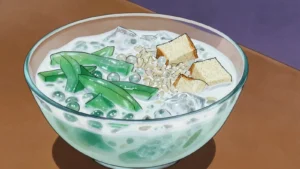 Shwe Yin AyeCoconut milk dessert with sago, jelly and bread over ice
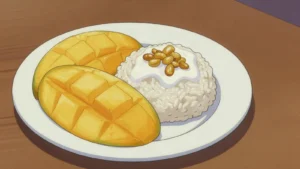 Mango Sticky RiceRipe mango with coconut-cream sticky rice, hot-season treat
 KololakLarge pounded meatballs poached in broth, sometimes filled with dried fruit.
 TangyuanGlutinous rice balls with sesame or peanut filling in sweet soup.
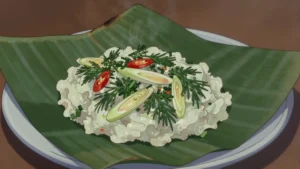 Mok PaFish steamed in banana leaf with dill, lemongrass and chili
Glutinous rice and the short grains is tagged on 154 dishes from 69 countries in the atlas. These notes are written from general knowledge and carry no per-fact citation — see About.