The green nut of a Persian desert tree, split from its shell by hand or by habit — sweet, resinous, delicate — the nut of Iranian and Turkish sweets, of baklava, halva, kulfi and ice cream, and eaten by the bowlful, salted, in every Middle Eastern home.
Where it comes from
The pistachio tree is native to Persia and Central Asia, and Iran remains its spiritual home and one of its two great producers, with Kerman and Rafsanjan the famous regions; the United States, in California, is the other. Turkey grows the small, intensely flavoured Antep pistachio of Gaziantep, the baklava capital; Sicily grows the Bronte pistachio on the slopes of Etna, the most expensive and most prized in Europe. The shell splits naturally when the nut ripens, which is why they are sold opened and why a closed shell means an unripe kernel.
The pistachio’s colour is as valued as its flavour — a truly green pistachio, from a good variety picked and dried carefully, is the mark of quality in Iranian and Turkish sweets — and its flavour is delicate and easily lost. It is a nut for sweets above all: baklava, halva, Turkish delight, Persian nougat, Sicilian gelato and granita, Indian kulfi and Mughal sweets; and in savoury cooking, in Persian and Turkish rice, in Sicilian pesto and pasta, and in the French and Italian mortadella and pâtés.
Varieties
- Kerman (Californian) — Large, round, pale green, mild. Most American pistachios; good for eating, less intense for cooking.
- Iranian (Akbari, Ahmad Aghaei, Fandoghi) — Long or round varieties, deeply flavoured, often greener; the standard of quality.
- Antep (Gaziantep, Turkish) — Small, slim, intensely green and flavoured; the baklava pistachio.
- Bronte (Sicilian) — Small, elongated, brilliant green, strongly flavoured; protected by name and very expensive. For gelato and pesto.
- Pistachio paste — Pure ground pistachio, for gelato, cream and pastry; check it is not mostly almond and colouring.
In the kitchen
Shell them by hand — a closed shell can be opened with the half-shell of another — and blanch to remove the skins if the green colour matters: a minute in boiling water, then rub. Do not toast pistachios for sweets, where their delicate flavour and colour would go; toast lightly for savoury use. Chop or grind at the last minute.
Ground pistachio in baklava, in a frangipane, in Sicilian pesto with basil; whole in Persian jewelled rice, in mortadella, in Turkish delight; crushed over kulfi, gelato, halva and yoghurt. Pistachio with rosewater, cardamom and honey is the Persian and Turkish palate; with orange and chocolate, the Sicilian.
Choosing and keeping
Buy in the shell for freshness, or shelled and unsalted for cooking; kernels should be firm, green to yellow-green and taste sweet, not stale. They go rancid within months at room temperature — keep them in the fridge or freezer.
Colour tells you a great deal: dull, yellow-brown kernels are old or a poor variety; deep green are prized and priced accordingly. Salted roasted pistachios are for eating, not baking.
Dishes with pistachio
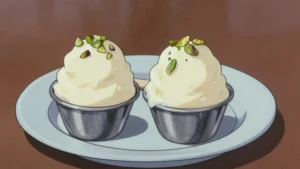 KulfiDense frozen milk reduced with cardamom, set in metal cones, never churned
 Mhalbirose-scented rice-flour milk pudding dusted with cinnamon
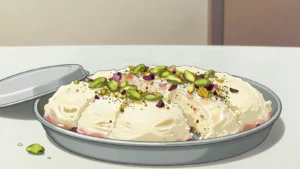 Sheer YakhHand-churned ice cream with cardamom, rosewater and pistachio, cut into slabs
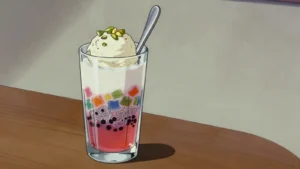 FaloodaVermicelli, basil seed and rose syrup layered with milk and ice cream
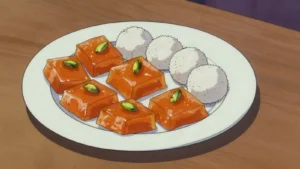 Jazariyehcarrot paste cooked with sugar and pistachio, cut into squares
 Awamehcrisp fried dough balls rolled in syrup and sesame
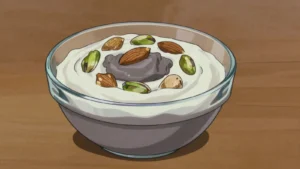 Assidat zgougouAleppo-pine cream pudding layered with custard and nuts for Mouled
 Kacha GollaLoose, crumbly fresh-cheese sweet eaten with a spoon rather than shaped
Pistachio is tagged on 127 dishes from 41 countries in the atlas. These notes are written from general knowledge and carry no per-fact citation — see About.