The red-orange oil pressed from the fruit of the West African oil palm — earthy, savoury, faintly of carrots — the cooking fat of West Africa and Bahia, and the base of the region’s soups and stews; not to be confused with the refined white palm oil of industry.
Where it comes from
The oil palm is native to West Africa, where its fruit has been pressed for oil for thousands of years — palm oil was found in an Egyptian tomb, having travelled up the continent. Unrefined red palm oil, dendê in Brazil and zomi in Ghana, is the defining fat of Nigerian, Ghanaian, Cameroonian, Ivorian and Congolese cooking: the colour and flavour of egusi soup, palm nut soup, jollof in some hands, and the Bahian moqueca and acarajé that enslaved West Africans carried to Brazil.
Two very different products share the name. Red palm oil is the unrefined oil of the fruit’s flesh, deeply coloured by carotenoids, with a distinctive earthy flavour, made and used at small scale for cooking. Refined, bleached and deodorised palm oil — pale, flavourless, solid at room temperature — is the world’s most produced vegetable oil, grown on vast plantations in Indonesia and Malaysia for processed food, and is the one at the centre of deforestation concerns. In the kitchen, palm oil means the red one.
Varieties
- Red palm oil (dendê, zomi) — Unrefined, deep red-orange, strongly flavoured. For West African soups and stews and Bahian cooking.
- Palm nut cream / concentrate — The pulped fruit in a tin, for palm nut soup (banga, abenkwan) where the whole fruit is used.
- Palm kernel oil — From the seed inside the nut, not the flesh; pale, different, used in soap and industry.
- Refined palm oil — Neutral, colourless, solid; the industrial fat. Not a cooking substitute for the red oil.
In the kitchen
Heat it gently. Red palm oil is warmed, not brought to a shimmer — high heat darkens it and turns the flavour acrid — and onion, tomato and chilli are fried in it as the base of a soup or stew, then the greens, fish or meat. It solidifies when cool and softens in warmth; a spoonful over rice or beans is a finish as well as a start.
West African: egusi soup, palm nut soup, red-red beans with fried plantain, okra soup. Brazilian: moqueca baiana, vatapá, acarajé fritters fried in it. Palm oil pairs with tomato, onion, chilli, ginger, dried fish and shrimp, okra and greens. A little goes a long way in flavour and colour.
Choosing and keeping
Buy red palm oil from African or Brazilian grocers; it should be deep red, opaque and smell fresh and earthy, not rancid. It keeps for months in a cool cupboard and solidifies below room temperature, which is harmless.
The colour stains everything — cloths, boards, clothes. Refined palm oil in the supermarket margarine aisle is a different product and will not give a dish its colour or flavour.
Dishes with palm oil
 SombePounded cassava leaves cooked long with palm oil, groundnut and smoked fish
 Kati katiFire-grilled chicken finished in palm oil, eaten with corn fufu
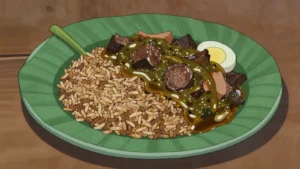 Ofada riceLocal unpolished rice with spicy green-pepper ayamase stew
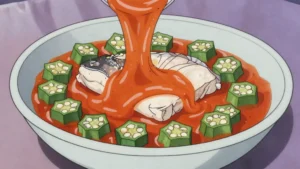 Dongo-dongoSilky okra sauce with fish
 AttiékéTangy fermented cassava couscous served with grilled fish and pepper relish
 Ibiharagered kidney beans fried with onions and palm oil, the daily staple
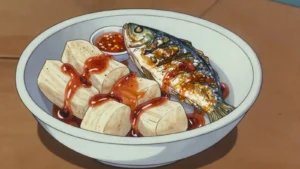 MatabalaBoiled tannia cocoyam tubers accompanying fish
 Platano asadoRipe plantain roasted whole on a charcoal grill and eaten from the skin
Palm oil is tagged on 188 dishes from 29 countries in the atlas. These notes are written from general knowledge and carry no per-fact citation — see About.