The creamy pale beans — cannellini, haricot, navy, butter and lima — that cook to a soft, buttery texture and take on whatever they are cooked with, from Tuscan olive oil and sage to Boston molasses to a French cassoulet.
Where it comes from
All of these are American common beans (the butter and lima beans are a related species from the Andes) that Europe adopted in the sixteenth century and made its own. Tuscany’s love of white beans earned Tuscans the nickname mangiafagioli, bean-eaters; the Languedoc built cassoulet on them; the small haricot became the navy bean of the US Navy’s ration and the baked bean of Boston and, in a tin with tomato sauce, of Britain. Greece, Turkey and the Balkans have bean stews as national dishes.
Their virtue is a mild, creamy blandness that carries flavour. They absorb oil, stock and aromatics as they cook, and the starch they release thickens the liquid around them into a natural sauce. Different sizes suit different jobs: the small haricot for baked beans and soups, the medium cannellini for salads and Tuscan dishes, the large butter bean for stews where a big, soft bean is wanted.
Varieties
- Cannellini — Medium, kidney-shaped, creamy. The Tuscan bean — fagioli all’uccelletto, ribollita, with tuna in a salad.
- Haricot / navy bean — Small, oval, firm. For baked beans, cassoulet and soups.
- Great Northern — Medium American white bean, mild and slightly grainy; for soups and chilli blanco.
- Butter bean / lima bean — Large, flat, buttery (a different species). For Greek gigantes plaki, Southern succotash and stews.
- Tarbais — The large, flat, thin-skinned French bean of authentic cassoulet, grown in the south-west and protected by name.
- Flageolet — Small pale green beans picked young and dried; delicate, the classic with roast lamb in France.
In the kitchen
Soak overnight, then simmer very gently — never boil hard — with a bay leaf, garlic and a splash of olive oil until tender but whole, salting only when they are soft. Gentle heat keeps the skins intact; a rolling boil bursts them. An hour to two hours depending on age. Cooked in their liquid and left to cool in it they season through and stay creamy.
Tuscan: warm with olive oil, garlic, sage and tomato. Greek: gigantes baked with tomato, onion and dill. French: cassoulet, or flageolets with lamb. British and American: baked slowly with molasses or treacle, mustard and pork. Blended with their liquid, garlic and oil they make a dip or a soup base.
Choosing and keeping
Look for whole, uncracked, uniformly pale beans; wrinkled or yellowed beans are old and will cook unevenly. Keep sealed and dry, and use within a year. Tinned white beans are good, and cannellini in particular tin well.
Cooked beans keep four or five days in their liquid in the fridge and freeze well. A pinch of bicarbonate in the soaking water softens the skins of very old beans.
Dishes with white beans
 Tavë me groshëbaked bean stew served bubbling in earthenware
 Bob chorbamonastery-style bean soup with mint and savory
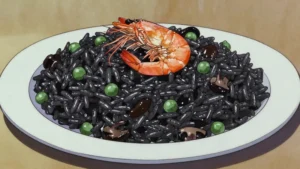 Diri ak djon djonRice blackened with native djon djon mushrooms
 LoubiyaStewed beans in oil and tomato, scooped up with bread or fritters
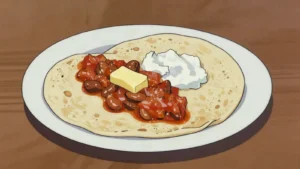 Dholl purisoft split-pea flatbreads with curry, rougaille and pickles; island icon
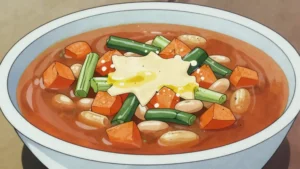 Minestronevegetable and bean soup with pasta or rice
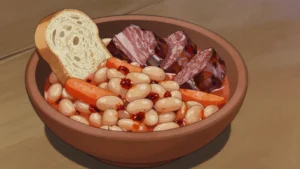 Pasuljslow-cooked beans with smoked ribs and paprika
 Sept cariSeven vegetable curries served together on a banana leaf with rice
White beans is tagged on 36 dishes from 28 countries in the atlas. These notes are written from general knowledge and carry no per-fact citation — see About.