The small, glossy, dense black turtle bean of Latin America and the Caribbean — earthy, slightly sweet, with a thick dark broth — the bean of Cuban moros y cristianos, Brazilian feijoada and the Mexican frijoles negros.
Where it comes from
The black turtle bean is a variety of the common bean domesticated in Mesoamerica, and it remains the bean of southern Mexico, Central America, Cuba, Venezuela and Brazil, where the daily plate of rice and black beans is the national meal under different names. It travelled north into the American Southwest and, more recently, everywhere. It is not the same as the Chinese fermented black bean, which is a salted soybean.
What sets it apart is its broth: black beans cooked slowly release a thick, inky, savoury liquid that is as much the dish as the beans themselves, and the Cuban and Brazilian recipes are built around keeping that liquid rich. Cooked with pork, garlic, cumin, oregano and bay, then finished with a splash of vinegar or a squeeze of orange, it is one of the great cheap dishes of the world.
Varieties
- Black turtle bean — The standard small black bean, dried or tinned. For frijoles negros, feijoada, soups and salads.
- Black Valentine and other heirlooms — Slightly larger, creamier heirloom types grown in the US Southwest.
- Tinned black beans — Convenient and decent; rinse for salads, keep the liquid for a soup.
In the kitchen
Soak overnight or not — black beans cook in about an hour and a half unsoaked — and simmer gently with a bay leaf, a halved onion and a few cloves of garlic until tender, salting towards the end. Keep the liquid; it is the sauce. For refried beans, fry the cooked beans in lard or oil and mash them roughly with some of their broth.
Cuban style: cooked with green pepper, onion, garlic, cumin and oregano, finished with vinegar and served over rice. Brazilian: with pork and smoked sausage as feijoada. Mexican: with epazote, served with rice and tortillas. Black beans with lime, coriander and chilli make a salad; blended with cumin, a soup.
Choosing and keeping
Dried beans should be glossy and uniform, not dull or cracked; beans more than a year or two old take much longer to soften and may never quite get there. Buy from a shop that turns them over and keep them in a sealed jar.
Cooked beans keep four or five days in the fridge in their liquid and freeze well in portions. Tinned beans are fine for quick dishes.
Dishes with black beans
 GallosWarm tortilla folded around a single filling and eaten in the hand
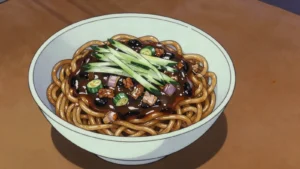 JjajangmyeonKorean-Chinese noodles in glossy black-bean sauce with pork and onion
 ArregladosSmall soft rolls split and filled with shredded beef, cheese or beans
 Khao LamSticky rice, coconut and black beans roasted inside bamboo
 Pabellón criolloShredded beef, black beans, rice and fried plantains; national plate
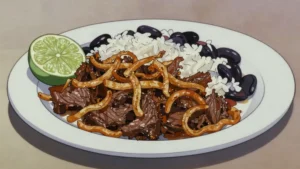 Vaca fritaCrisped shredded beef with lime and onions
 Moros y cristianosBlack beans and rice cooked together
 TlayudaHuge crisp tortilla spread with pork lard, beans, quesillo and grilled meat
Black beans is tagged on 31 dishes from 16 countries in the atlas. These notes are written from general knowledge and carry no per-fact citation — see About.