The immature pod of the common bean, eaten whole while it is still tender — French beans, runner beans, string beans — snapped, boiled or steamed, and dressed with almost anything.
Where it comes from
The common bean, Phaseolus vulgaris, is American, domesticated separately in Mexico and the Andes, and it reached Europe in the sixteenth century; eating the young green pod rather than the dried seed became a European habit, and the French made it their own — haricots verts, slim and stringless, are still the standard for a fine green bean. Runner beans, a different species from the Central American highlands, are the big flat beans of English gardens, grown as much for their scarlet flowers as their pods.
Old varieties had a fibrous string along the seam, hence ‘string bean’; breeding removed it a century ago, and modern beans need only topping. The pods are cooked whole or cut, and unlike most green vegetables they are better properly cooked than undercooked — a squeaky, raw-tasting green bean is a modern fashion, and a tender one dressed with oil or butter is what most of the world eats.
Varieties
- French bean (haricot vert, fine bean) — Slim, round, dark green, stringless; the finest and quickest-cooking. Steamed and dressed.
- Bobby / round green bean — Thicker, rounder, longer than a fine bean; the everyday green bean.
- Runner bean — Long, flat, broad pods; a separate species. Sliced diagonally, boiled; the English summer bean.
- Flat (Romano, Italian) bean — Broad, flat, tender pods of the common bean; stewed slowly with tomato in Italy and Greece.
- Yellow wax bean — A pale yellow French bean; milder, for colour in mixed salads.
- Yardlong bean (asparagus bean) — A different species, half a metre long, from Asia; stir-fried in Chinese and Southeast Asian kitchens.
In the kitchen
Boil in plenty of well-salted water until tender — four to seven minutes for fine beans, longer for runners — then either serve at once or plunge into cold water to hold the colour and reheat in butter. Steaming works but dulls them slightly. Undercooked they squeak and taste raw; overcooked they go khaki.
Dressed warm with olive oil, lemon and garlic; with butter and toasted almonds; with shallot vinaigrette as a salad; with sesame in Japan (goma-ae); stir-fried hard with pork and chilli in Sichuan. Stewed slowly with tomato and onion — Greek fasolakia — flat beans become a different, softer dish.
Choosing and keeping
Beans should snap cleanly and be bright and unblemished, without visible seeds bulging through the pod, which means they are old and tough. Use within a few days; they keep in the fridge in a bag. Top them; tailing is optional.
Frozen green beans are acceptable for stews and soups, poor for a salad. Runner beans should be young — big ones are stringy and need the edges peeled off.
Dishes with green beans
 LegimThick braised vegetable stew with beef or crab
 CharquicánMashed potato-squash stew with charqui or beef, topped fried egg
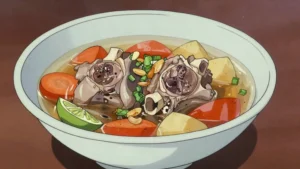 Sop BuntutClear oxtail soup with vegetables, also fried or grilled
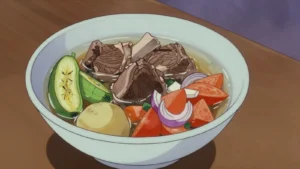 Mchemshonorthern one-pot boil of meat, bananas, potatoes and vegetables
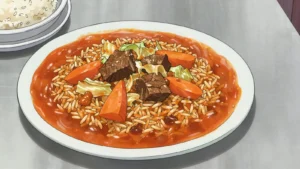 Riz grasRich one-pot rice cooked in tomato broth with meat and vegetables
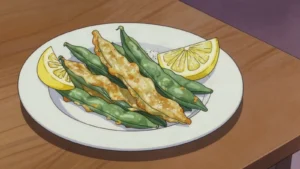 Peixinhos da hortaGreen beans in light batter, deep fried; eaten as a meatless snack.
 TamalChristmas pork tamales steamed in banana leaves
 Sept cariSeven vegetable curries served together on a banana leaf with rice
Green beans is tagged on 51 dishes from 45 countries in the atlas. These notes are written from general knowledge and carry no per-fact citation — see About.