The sweet, dense, orange- or white-fleshed root of a tropical American vine — no relation to the potato — that is a staple across Africa, the Pacific and East Asia and a comfort food of the American South.
Where it comes from
The sweet potato was domesticated in Central or South America and, remarkably, reached Polynesia before Europeans did — it was growing in New Zealand and Hawaii when Cook arrived, carried by Polynesian voyagers who had reached South America and come back. The Spanish and Portuguese carried it to Europe, Africa and Asia in the sixteenth century; China now grows most of the world’s crop and Africa depends on it. It is a morning-glory relative, and its leaves are eaten as a green.
There are two broad kinds. The moist, orange-fleshed varieties, high in sugar and beta-carotene, are the ones of the American South — baked, candied, in pie — and the ones most Western shops sell. The drier, starchier white-, cream- or purple-fleshed kinds are the staples of Japan, Korea, the Pacific and much of Africa, eaten roasted whole from street carts in Tokyo and Seoul, pounded, or fried. Yams, in the botanical sense, are a different plant entirely.
Varieties
- Orange-fleshed (Beauregard, Covington) — Copper skin, moist, sweet orange flesh. The American sweet potato; for baking, roasting, mashing and pie.
- Japanese (satsumaimo) — Purple-red skin, pale yellow flesh, dry and chestnut-sweet. Roasted whole as yaki-imo; in tempura and sweets.
- Purple (Okinawan, Stokes) — Purple flesh, dry, sweet; for Hawaiian and Filipino sweets and for roasting.
- White-fleshed (boniato, camote) — Drier, starchier, less sweet; the Caribbean and Latin American kind, boiled or fried.
- Kumara — The New Zealand sweet potato, in red, gold and orange varieties; a national staple.
- Sweet potato leaves — The vine’s greens, cooked like spinach in Africa and Asia.
In the kitchen
Roast or bake it whole in its skin, slowly, until it collapses — the long heat converts starch to sugar and the flesh caramelises against the skin. Cut into wedges and roasted hot it crisps at the edges. Boiling and steaming keep it firmer and less sweet, for mashes and gnocchi.
Its sweetness wants salt, chilli, lime, smoke or something sour against it: with chipotle and lime in Mexico, with peanut and chilli in West Africa, with soy and sesame in Japan, with butter and black pepper anywhere. Fried, it browns faster than potato because of the sugar.
Choosing and keeping
Firm, smooth, without cracks, soft spots or sprouting; small and medium roots are sweeter and less fibrous. Do not refrigerate — the cold hardens the core and spoils the flavour. In a cool dark cupboard they keep two or three weeks.
Cooked sweet potato keeps a few days in the fridge and freezes well mashed. Once cut, the flesh oxidises and greys; work quickly or hold in water.
Dishes with sweet potato
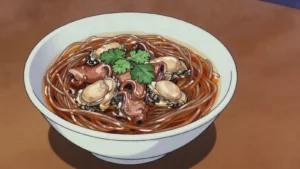 Oyster VermicelliThick bonito broth with thin wheat noodles, oysters and pork intestine
 Bajan fish brothClear peppery broth of fish, ground provisions and dumplings
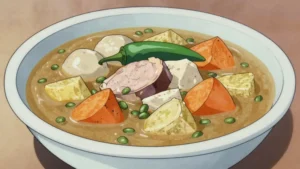 SancocheThick soup of salt meat, ground provisions, split peas and dumplings
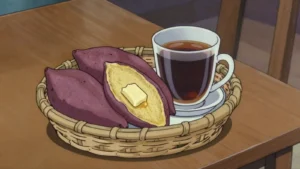 MbambairaSweet potatoes boiled or roasted, eaten hot with tea
 Potato breadDense sweet loaf made with mashed sweet potato, sliced thick
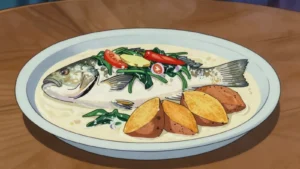 Fish in Coconut CreamFresh reef fish simmered in coconut cream with greens, coastal staple
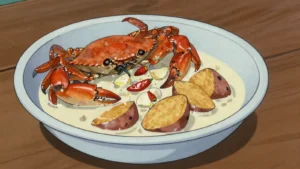 Mud CrabMangrove crab boiled or cooked in coconut cream, sold live at roadside markets
 Kissanguahomemade fermented cornmeal drink, lightly sweet
Sweet potato is tagged on 132 dishes from 60 countries in the atlas. These notes are written from general knowledge and carry no per-fact citation — see About.