The feathery herb of the Baltic, Scandinavia, Russia and Iran — fresh, grassy, faintly of anise and caraway — that goes with fish, potatoes, cucumbers and sour cream so naturally that whole cuisines are built on the pairing.
Where it comes from
Dill grows wild from the eastern Mediterranean to southern Russia and was used by the Egyptians and the Greeks; its name comes from a Norse word meaning to lull, from an old use as a soother for infants. It is the herb of the north and the east — the green in Swedish gravlax and Polish pickles, in Russian and Ukrainian soups and salads, in Greek tzatziki and spanakopita, in Turkish and Persian rice — and it is used in quantities that would look reckless with other herbs.
Dill seed is the plant’s dried fruit, warmer and more caraway-like than the leaf, and it flavours pickling brines and rye bread. The fronds are the leaf, and they are fragile: dill loses its scent within minutes of hard heat, which is why it appears at the end of a dish or raw in it.
Varieties
- Common dill — Fine, feathery green fronds with a fresh anise scent. The dill of Scandinavian and Russian cooking.
- Dill seed — The flat, oval, tan seeds. Warmer and more pungent; for pickles, breads and Indian dals.
- Dill flower (crown dill) — The flowering head, cut just before it seeds. Intensely flavoured; the traditional herb for Swedish crayfish and cucumber pickles.
- Shevid (Persian dill) — The same plant used in enormous quantity in Iranian cooking — a bunch or two of chopped dill through a pot of rice with broad beans.
In the kitchen
Add it raw or at the very end: stirred into soup as it comes off the heat, folded into potato salad or yoghurt, pressed onto the surface of a fish before it is cured or baked briefly. Cooked long, it turns dull and grassy.
Dill and sour dairy belong together — dill with yoghurt, sour cream, kefir or crème fraîche is the sauce for almost anything from the Baltic to the Caspian. It also belongs with cucumber, beetroot, salmon, new potatoes and eggs. Be generous: a tablespoon is a garnish, a cup is an ingredient.
Choosing and keeping
Fresh dill should be bright green and springy. It wilts faster than almost any herb; in a glass of water in the fridge under a bag it lasts four or five days.
Dried dill weed keeps some flavour — more than dried parsley or coriander — and is usable in a cooked dish at a pinch, but it is a shadow of the fresh herb. Dill freezes acceptably chopped.
Dishes with dill
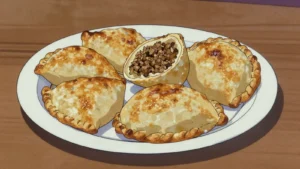 Cheburekilarge half-moon turnovers of thin dough filled with minced lamb, fried
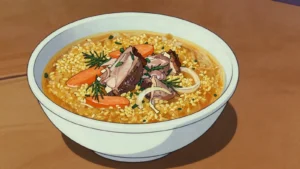
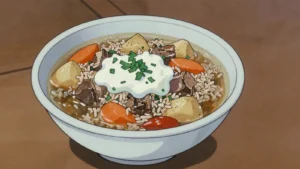 Mastavasour rice soup with meat and vegetables
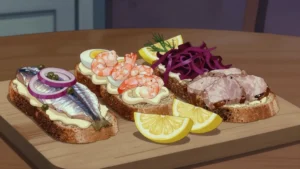 SmørrebrødOpen rye sandwiches topped with herring, egg-shrimp, or roast pork.
 Gutaphalf-moon flatbread fried with greens, meat or pumpkin
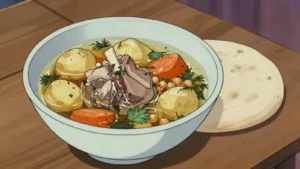 Shurboslow lamb soup with potato and chickpeas
 Kespehand-cut noodle soup with lamb, potato and dill
 Kapusnyaksauerkraut soup with pork and millet
 Olivier saladpotato, egg, pea and mayonnaise salad, New Year centerpiece
Dill is tagged on 170 dishes from 41 countries in the atlas. These notes are written from general knowledge and carry no per-fact citation — see About.