The sourest common fruit and the one a cook reaches for most — a squeeze at the end of almost anything brightens it, and the zest carries an aromatic oil the juice does not have.
Where it comes from
The lemon is a hybrid, probably of the bitter orange and the citron, that arose in north-east India or the Burma–China borderlands and travelled west along the Arab trade routes. It was grown in Persia and the Mediterranean by the tenth century and became the citrus of the Arab and then the European kitchen; the Spanish carried it to the Americas. Today the great lemon-growing regions are southern Italy, Spain, Turkey, Argentina, California and India.
A lemon is two ingredients. The juice is almost pure acidity — citric acid with very little sugar — and its job is sourness and balance. The zest, the thin yellow outer skin, holds the fruit’s oil glands and all of its perfume; it can be grated, peeled or preserved, and it is what makes a dish taste of lemon rather than merely sour. The white pith beneath is bitter and best avoided.
Varieties
- Eureka — The common supermarket lemon — thick-skinned, acidic, year-round. What ‘a lemon’ means in most recipes.
- Lisbon — Similar to Eureka, slightly smoother and juicier; the main Australian and Californian winter lemon.
- Meyer — A lemon–mandarin cross: thinner-skinned, sweeter, floral, less acidic. Good for zest and desserts; not a substitute where sharpness is the point.
- Amalfi / Sorrento (Femminello) — The large, knobbly, intensely fragrant lemon of the Italian coast, protected by name. Thick, oily zest — the lemon of limoncello and granita.
- Verna — Spain’s main lemon: large, few seeds, very juicy, with a thick rind.
- Preserved lemon — Whole lemons salted and left for weeks until the rind softens and mellows. Rind and pulp both used, chopped into Moroccan tagines and salads.
In the kitchen
Zest before you juice, and zest only the yellow — a fine grater or a microplane takes the coloured skin and leaves the bitter pith. Zest added at the start of cooking mellows into the dish; added at the end it is bright and perfumed. Juice almost always goes in at the end, off the heat, since heat flattens its freshness.
Acid does more than taste sour: it stops cut fruit browning, keeps green vegetables from greying, sets a ceviche, curdles milk for paneer and balances fat and salt. A dish that tastes flat and heavy usually wants lemon before it wants more salt.
Choosing and keeping
A heavy lemon is a juicy one. The skin should be fine-grained and glossy, and the fruit should give slightly under the thumb. Rock-hard, light lemons are dry inside. Unwaxed lemons are worth seeking out if the zest is going to be used.
Whole lemons keep a week at room temperature and three or four weeks in the fridge. Juice freezes well in ice-cube trays; zest freezes too, and dries well in a warm oven for a jar of lemon powder.
Dishes with lemon
 Cozonacbraided holiday sweet bread swirled with walnut-cocoa
 Linzer torteSpiced nut pastry with redcurrant jam under a lattice top
 Zubrovkavodka infused with bison grass from the Białowieża forest
 Margat bamiaokra and lamb stew soured with tamarind, eaten over rice
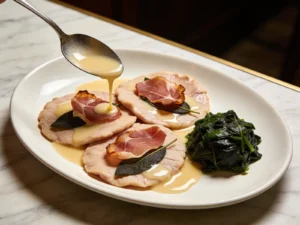 Saltimbocca alla romanaveal with prosciutto and sage in white wine
 BamkuchRing-shaped tree cake baked layer by layer on a turning spit.
 Hawawshibaladi bread packed with spiced minced beef, baked crisp
 LahmajoPaper-thin round of dough spread with minced meat, rolled up with lemon.
Lemon is tagged on 1,013 dishes from 166 countries in the atlas. These notes are written from general knowledge and carry no per-fact citation — see About.