A rhizome used as much for its colour as its taste, and the one that stains everything it touches a permanent yellow.
Where it comes from
Turmeric is native to South Asia and has been cultivated in India for thousands of years, for cooking, for dyeing and in ritual. It is a ginger relative and grows as an underground rhizome that is boiled, dried and ground.
Its pigment, curcumin, is what colours everything from curry powder to mustard to some cheeses. It is also unstable in light, which is why turmeric fades in a jar left on a windowsill.
Varieties
- Ground turmeric — The usual form. Earthy, slightly bitter, faintly medicinal.
- Fresh turmeric — Brighter, more citrusy and gingery, and far less bitter than the dried.
- Alleppey and Madras — Indian grades — Alleppey darker and higher in curcumin, Madras brighter yellow.
- White turmeric / zedoary — A related rhizome, bitter and mango-scented, used in Southeast Asia.
- Mango ginger — Another relative that smells of raw mango, used in Indian pickles.
In the kitchen
Turmeric tastes raw and chalky until it has been cooked in fat. That is the reason it goes in with the onions and not at the end, and the reason a dish that tastes dusty and medicinal usually had it added too late.
Too much turmeric is bitter, not more yellow. It is a background spice, and colour is achieved with a small amount plus time.
It stains worktops, wooden spoons, plastic and hands. On a plastic container the stain is permanent; sunlight fades it, slowly.
Dishes with turmeric
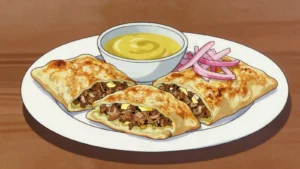 MurtabakGriddled roti parcel stuffed with spiced minced meat and egg
 ZarbBedouin lamb and vegetables slow-roasted in underground sand oven
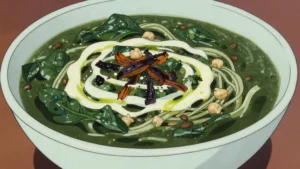 Ash reshtehthick herb-noodle-bean soup with fermented whey and fried mint
 Mee RebusYellow noodles in thick sweet potato and prawn gravy with egg and lime
 MohingaNational breakfast: rice noodles in catfish-lemongrass broth with crispy fritters
 Mbaazi wa naziPigeon peas stewed in coconut milk, the classic partner to mahamri
 Malu PaanSoft bun stuffed with spiced fish and potato, sold from tuk-tuk bakeries
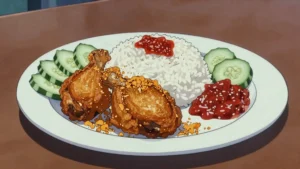 Ayam GorengTurmeric-galangal marinated chicken fried until deeply golden
Turmeric is tagged on 419 dishes from 76 countries in the atlas. These notes are written from general knowledge and carry no per-fact citation — see About.