One species bred into a dozen vegetables that look nothing alike, and the vegetable behind the great fermented preserves of Europe and Korea.
Where it comes from
Cabbage, broccoli, cauliflower, kale, kohlrabi, Brussels sprouts and collards are all Brassica oleracea — the same plant, selected over centuries for different parts: the bud, the flower, the leaf, the stem. It is the most dramatic case of selective breeding in the vegetable garden.
Cabbage stores through winter and ferments reliably in nothing but its own juice and salt, which made it central to survival across northern and eastern Europe. Sauerkraut and kimchi are the same principle solved twice, thousands of miles apart.
Varieties
- White / green cabbage — Dense, keeps for months. Shredded raw, braised, or fermented.
- Savoy — Crinkled, looser, more tender. Better for wrapping and quick cooking.
- Red cabbage — Pigmented with anthocyanins, which turn blue in alkaline conditions — the reason braised red cabbage is nearly always cooked with vinegar or apple.
- Napa / Chinese cabbage — Milder, higher water, thin-ribbed. The cabbage of kimchi.
- Kale and collards — Loose-leaf, tougher, and improved by frost. Long cooking in most traditions.
- Brussels sprouts — Buds along a stem. Bitter when boiled to death, sweet and nutty when roasted hard.
- Kohlrabi — The swollen stem. Crisp and sweet raw, like a mild turnip.
In the kitchen
The sulphurous cabbage smell is produced by prolonged heat — the longer it cooks, the more of it. Fast cooking, or genuinely slow braising with fat and acid, both avoid the middle ground where it is worst.
For sauerkraut and kimchi, the salt is not seasoning: it draws out water to make the brine, and it selects for the lactic acid bacteria that do the fermenting. Getting the ratio wrong is the usual reason a batch fails.
Dishes with cabbage
 ShucosGuatemalan hot dogs with guacamole, cabbage, and salsas
 Vepřo knedlo zeloRoast pork, bread dumplings, stewed cabbage; the Sunday trinity.
 Sarmasour cabbage rolls, fixture of holiday tables
 Suan CaiSour brined Chinese cabbage from the northeast, stewed with pork belly and glass noodles
 OkonomiyakiSavory cabbage pancake grilled with pork, sauce, mayonnaise and bonito flakes
 Choucroute garnieFermented cabbage braised in wine with sausages, bacon and salted pork.
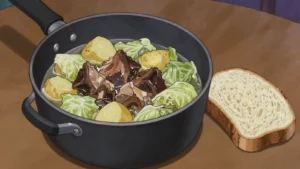 Kastradinasalted, wind-dried mutton, boiled with cabbage in winter
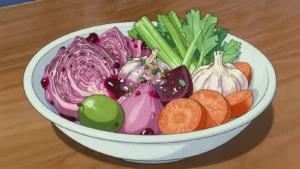 MzhaveuliBrined vegetables such as cabbage, green tomatoes and garlic, eaten with meat and wine.
Cabbage is tagged on 130 dishes from 70 countries in the atlas. These notes are written from general knowledge and carry no per-fact citation — see About.