Meat from animals that were not farmed — leaner, darker and more strongly flavoured than their domestic equivalents, and almost always in need of added fat.
Where it comes from
Game covers wild deer, boar, hare, rabbit, and wild birds, and its cooking traditions are those of places where hunting stayed part of the food supply: central and eastern Europe, Scandinavia, the Alps, and rural Britain.
Wild animals move, so their muscle carries more myoglobin and far less intramuscular fat. That is the whole of what makes game cook differently — it is not that it is stronger tasting, though it is; it is that there is no fat inside the muscle to keep it moist.
Varieties
- Venison — Deer. Very lean, deep red, best served rare in the prime cuts and braised in the working ones.
- Wild boar — Darker and firmer than pork, and much leaner. Long braises, ragùs, sausage.
- Hare — Dark, rich, strongly flavoured. Jugged, or in a long ragù.
- Rabbit — Pale and mild — closer to chicken than to hare. Dries out fast.
- Game birds — Pheasant, partridge, grouse, wood pigeon. Small, lean breasts that want minutes, legs that want an hour.
In the kitchen
Add fat or accept dry meat: bard a roast with pork fat, braise it in something, or serve it rare. There is no third option.
Hanging — ageing the carcass in cold air — is what develops the flavour people mean by gamey. It is a choice made before the meat reaches a kitchen and cannot be added afterwards.
Shot birds can carry lead shot. Feel for it before serving.
Dishes with game
 Hamam mahshipigeon stuffed with freekeh or rice, then roasted; Cairo delicacy
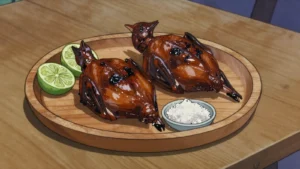 Roasted Noddy BirdBlack noddy seabirds caught at dusk and grilled, traditional delicacy
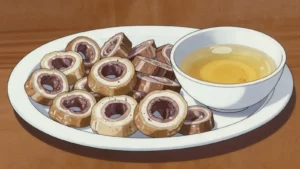 Kartahorse intestine turned inside out and boiled, sliced onto festive tables
 BasashiRaw horse meat sliced thin with ginger, garlic and sweet soy
 Stuffat tal-fenekrabbit stewed in wine, garlic and tomato, the national dish
 Mountain chickenCrapaud frog legs stewed creole-style; historic national dish, now rare
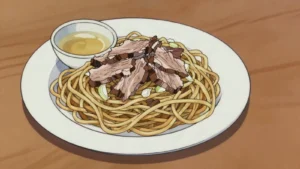 Naryncold hand-cut noodles with horse meat; Tashkent delicacy
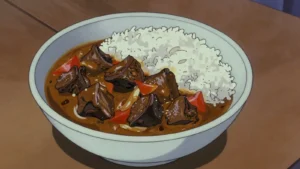 Kari sousourifruit bat curry, an old island delicacy
Game is tagged on 40 dishes from 37 countries in the atlas. These notes are written from general knowledge and carry no per-fact citation — see About.