The only common sweetener made by an animal rather than pressed, boiled or refined out of a plant — and the only one whose flavour is a direct record of which flowers were in bloom within about three kilometres of the hive.
Where it comes from
Honey is nectar that bees have swallowed, partly broken down with their own enzymes, and then dried in the comb by fanning it with their wings until the water content falls to roughly a fifth of the whole. At that concentration it will not ferment, which is why sealed honey keeps for years without anything being done to it.
Most of the world’s honey comes from the western honey bee, Apis mellifera, kept in movable-frame hives. It is not the only source. Apis cerana is the hive bee across much of Asia, Apis dorsata is the giant rock bee whose nests are cut from cliffs and tall trees in South and Southeast Asia, and the stingless bees of the genus Melipona and its relatives are kept in Central and South America, in parts of Africa and in northern Australia. Stingless-bee honey is thinner, more acidic and often tart, and is usually treated as a different substance from Apis honey rather than a cheaper version of it.
What separates one honey from another is almost entirely the flower. A hive placed in a chestnut wood makes something dark and bitter; the same hive moved to an orange grove three weeks later makes something pale and floral. Beekeepers who sell single-flower honey move hives to follow a bloom and take the crop off before the next one starts.
Varieties
- Acacia — From black locust rather than true acacia. Very pale, mild, and slow to crystallise because it is high in fructose — the honey to use when you do not want the honey to be noticed.
- Chestnut — Dark, resinous and frankly bitter behind the sweetness. Holds its own against strong cheese and cured meat where a mild honey would vanish.
- Buckwheat — Almost black, malty, with a barnyard edge. Common in Eastern Europe and the northern United States, and the usual choice for dark rye breads and gingerbreads.
- Manuka — From a New Zealand and Australian tea-tree. Thick, sharp, and priced far above other honeys on the strength of medical claims that are still argued over.
- Heather — From ling heather. Thixotropic — it sets to a jelly in the comb and has to be pressed rather than spun out, which is part of why it costs what it does.
- Orange blossom — Pale, with a clear citrus-flower note. A staple across the Mediterranean and in Mexican and Floridian production.
- Thyme — Aromatic and herbal, strongly associated with Greece and Sicily, where the bees work wild hillside thyme.
- Leatherwood — Tasmanian, from a rainforest tree, with a spicy balsamic character unlike anything else in the trade.
- Stingless-bee honey — Runnier, sourer and lower in sugar than Apis honey. Sold in small quantities under local names — melipona in Mexico, sugarbag in Australia.
In the kitchen
Honey is about a quarter to a third sweeter than sugar by weight and brings water with it, so it is not a one-for-one swap in baking: the usual adjustment is to use less of it than the sugar called for and to take some liquid out elsewhere. It is acidic, which is why recipes that lean on it often carry bicarbonate of soda as well.
It browns much faster than sugar because fructose caramelises at a lower temperature. That is an advantage on a roast duck or a tray of nuts and a nuisance in a cake, where it means a lower oven and a closer eye.
Heat drives off the aromatics that make an expensive single-flower honey worth buying. Cook with the cheap blend and finish with the good one — on yoghurt, on cheese, over warm pastry — where you can actually taste what you paid for.
Choosing and keeping
Crystallisation is not spoilage and says nothing about quality; it is a normal behaviour of a supersaturated sugar solution, and the speed depends on the flower. Standing the jar in warm water re-liquefies it. Boiling it does not improve it.
Honey should not be given to children under one year old. Spores that an adult gut handles without difficulty can germinate in an infant’s, and the resulting illness is serious.
Sealed and out of the light, honey effectively does not go off. Left open it draws water from the air, and dilute honey does ferment.
Dishes with honey
 ChebabThin saffron pancakes cooked on a hot plate, eaten with cream and date syrup.
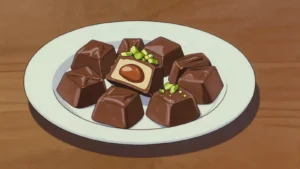 Camel milk chocolatepraline bars made with camel milk, dates and Arabian spices
 Ginger juiceSweet-spicy fresh ginger drink
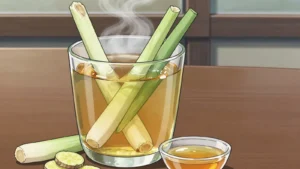 Thé à la citronnelleLemongrass leaves steeped with sugar and drunk hot
 BullaPale gelatinous enset starch cooked with butter into a springy porridge
 Medovukhafermented honey drink, lightly alcoholic and often spiced
 Korean Fried ChickenDouble-fried chicken glazed sweet-spicy, paired with beer and pickled radish
 Vin fiertRed wine mulled with honey, cloves and citrus, drunk in cold months.
Honey is tagged on 339 dishes from 129 countries in the atlas. These notes are written from general knowledge and carry no per-fact citation — see About.