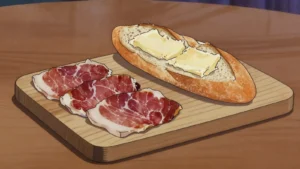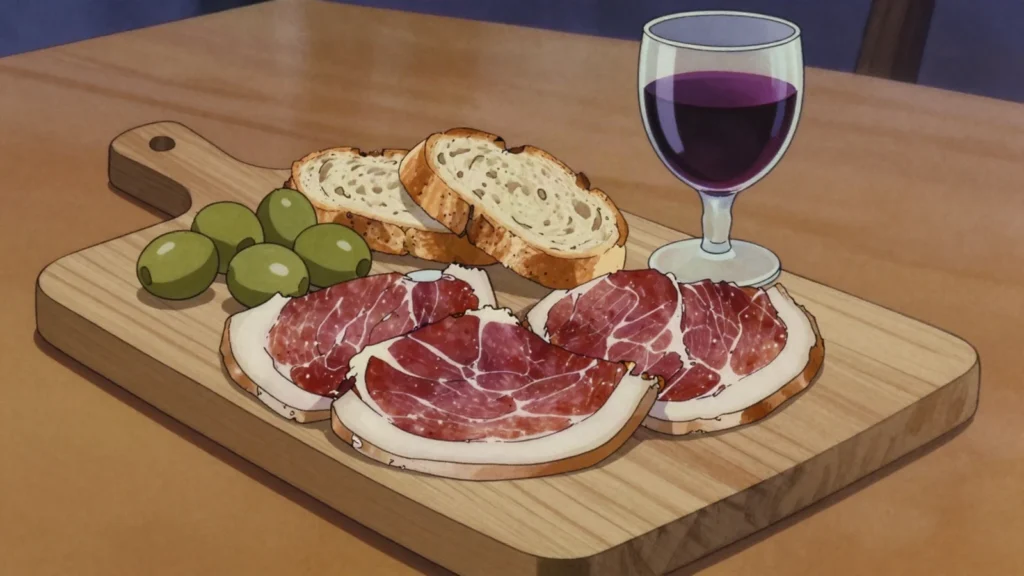

Bora-wind-dried Karst ham, sliced thin and never smoked. The burja wind off the mountains does what smoke does elsewhere, and it holds EU protected geographical indication status.
It is a PGI whose method is a Karst drying room opened to a specific wind, and a whole leg cured for a year gives no way to see a fault before it is cut.
What goes into it
- a pork leg, trimmed
- coarse sea salt
- black pepper
- the burja wind
How it is made
The leg is salted and pressed for two to three weeks, then hung in a drying room whose windows are opened when the burja blows. That cold dry wind pulls moisture out steadily without smoke, which is the defining difference from the Dalmatian style. The ham dries for a year or more, losing over a third of its weight.
How long it takes: twelve to eighteen months
How it is eaten
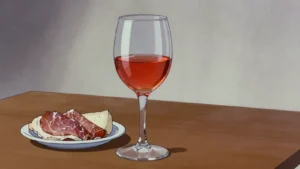
Shaved paper-thin with Teran, olives and bread.
History
Air-dried on the Karst in the burja wind, which dries the hams without smoke; it holds EU protected geographical indication status.
Frequently asked questions
What is Kraški pršut?
Kraški pršut is a charcuterie & cured from Slovenia: bora-wind-dried Karst ham, thinly sliced. Air-dried on the Karst in the burja wind, which dries the hams without smoke; it holds EU protected geographical indication status.
How is Kraški pršut made?
The leg is salted and pressed for two to three weeks, then hung in a drying room whose windows are opened when the burja blows. That cold dry wind pulls moisture out steadily without smoke, which is the defining difference from the Dalmatian style. The ham dries for a year or more, losing over a third of its weight. It takes twelve to eighteen months.
Can I make Kraški pršut at home?
No, and the atlas gives no method for it. It is a PGI whose method is a Karst drying room opened to a specific wind, and a whole leg cured for a year gives no way to see a fault before it is cut.
What goes into Kraški pršut?
A pork leg, trimmed, coarse sea salt, black pepper, the burja wind.
How is Kraški pršut eaten?
Shaved paper-thin with Teran, olives and bread.