A desert succulent whose sap is the base of tequila and mezcal, and whose roasted heart was a food in Mexico long before it was a spirit.
Where it comes from
Agaves are Mexican and southwestern North American plants that store years of growth in a heart, the piña, before flowering once and dying. Mesoamerican peoples roasted that heart as food, fermented the sap into pulque, and used the fibres for rope and cloth.
Distillation arrived with the Spanish and turned fermented agave into mezcal; tequila is a mezcal made from blue agave in a defined region. The plants take between seven and thirty years to mature depending on species, which is the constraint the whole industry runs against.
Agave syrup is a modern industrial product, not a traditional one. It is largely fructose, which is why it is sweeter than sugar and why the health framing around it does not hold up well.
Varieties
- Blue agave — Agave tequilana. Tequila, and most agave syrup.
- Espadín — The main mezcal agave, cultivated and relatively fast to mature.
- Tobalá, tepeztate, madrecuixe — Wild agaves used in mezcal, slower growing and scarcer.
- Aguamiel and pulque — Fresh sap, and the lightly fermented milky drink made from it. Pre-Hispanic and still made.
- Agave syrup — Sap processed into a neutral, very sweet syrup.
- Roasted piña — The cooked heart, sweet and fibrous, chewed rather than swallowed.
In the kitchen
Agave syrup is noticeably sweeter than sugar, so recipes need roughly a quarter less of it, and it is a liquid, so other liquids come down too.
It browns faster than sugar, in the same way honey does.
The smokiness in mezcal comes from roasting the piñas in earth pits over wood, not from the plant. It is a process flavour.
Dishes with agave
 MezcalSmoky agave spirit sipped neat with orange and chili salt
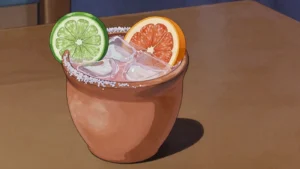 CantaritoTequila with lime, orange and grapefruit juice, salt and grapefruit soda in clay
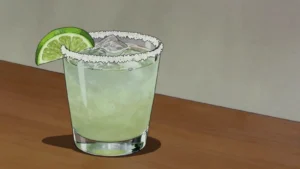 MargaritaTequila, lime, and orange liqueur with salted rim
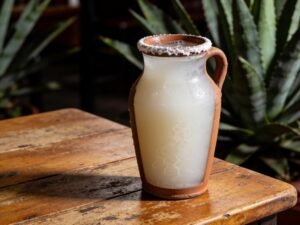 PulqueMilky, viscous fermented agave sap, lightly sour and mildly alcoholic
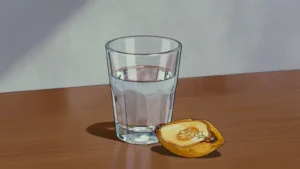 CocuyClear spirit distilled from roasted agave hearts, drunk neat in the northwest
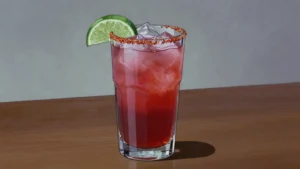 VampiroTequila lengthened with spiced tomato sangrita and grapefruit soda, chile-salt rim
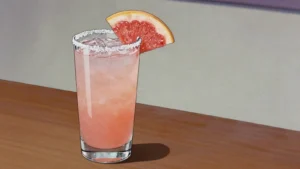 PalomaTequila lengthened with grapefruit soda and lime over ice with salt
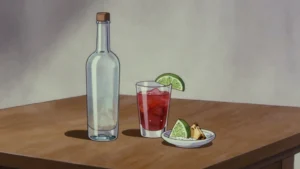 TequilaBlue agave spirit from Jalisco, sipped or in cocktails
Agave is tagged on 8 dishes from 2 countries in the atlas. These notes are written from general knowledge and carry no per-fact citation — see About.