The fruits of the hot belt that have no temperate equivalent — guava, passion fruit, soursop, jackfruit, breadfruit, durian — eaten fresh, juiced into the drinks of Latin America and Asia, and in the case of jackfruit and breadfruit cooked as a starch.
Where it comes from
Most of these are American or Southeast Asian in origin and have been traded between the two for five centuries: guava and passion fruit went east with the Portuguese and Spanish, breadfruit and jackfruit went west with the Europeans — the Bounty was carrying breadfruit seedlings from Tahiti to feed enslaved workers in the Caribbean when its crew mutinied. In their own regions they are everyday food; in temperate countries they arrive by air and are treated as exotics.
They divide by use. The soft, sour-sweet fruits — guava, passion fruit, soursop, papaya — are eaten fresh and, above all, turned into juices, agua frescas, ice creams and sweets, the fruit-drink culture of Brazil, Mexico, the Caribbean and Southeast Asia. The big starchy fruits — jackfruit and breadfruit — are cooked green as a vegetable or starch, roasted, fried or curried, and only eaten sweet when ripe. Durian is its own category: the smell divides the world.
Varieties
- Guava — Round, green or yellow, with pink or white flesh full of small seeds; musky, sweet-sour. In juice, paste (goiabada, guava cheese) and jam across Latin America.
- Passion fruit (maracuyá, granadilla) — Wrinkled purple or yellow shell around a pulp of sour, perfumed seeds. Strained into juice, sauces and desserts; the taste of Brazilian and Peruvian drinks.
- Soursop (graviola, guanábana) — Large, spiny, green, with creamy white sour-sweet flesh. In juices, ice cream and sweets in the Caribbean and Southeast Asia.
- Jackfruit — The largest tree fruit; ripe it is sweet, chewy and musky, unripe it is a fibrous starch cooked as a meat substitute in India, Sri Lanka and Indonesia (gudeg).
- Breadfruit — Round, green, starchy; roasted, boiled or fried like a potato across the Pacific and Caribbean. Rarely eaten ripe.
- Durian — Spiky, heavy, with custardy yellow flesh and a smell strong enough to be banned on public transport across Southeast Asia. Eaten fresh and in sweets.
In the kitchen
The soft fruits are best raw, juiced or puréed: guava and passion fruit strained through a sieve to lose the seeds and blended with water and sugar for a fresca, or cooked down with sugar into a paste or curd. Guava paste with fresh cheese is a Latin American dessert in two ingredients.
Green jackfruit and breadfruit are cooked as vegetables — boiled, then roasted or fried, or simmered in a curry or a coconut braise where their texture stands in for meat. Roast a whole breadfruit over coals until the skin blackens, then peel and slice. Ripe jackfruit and durian are eaten as they are.
Choosing and keeping
Guava and passion fruit are ripe when fragrant and yielding — a wrinkled passion fruit is ripe, not spoiled. Soursop should give slightly. Breadfruit for cooking should be firm and green; jackfruit for curry should be sold green and often comes tinned in brine, which is a good product.
Most tropical fruit does not like the fridge until fully ripe. Guava paste, tinned jackfruit and frozen fruit pulps (passion fruit, soursop, guava) from Latin American shops are the practical way to cook with these outside the tropics.
Dishes with tropical fruit
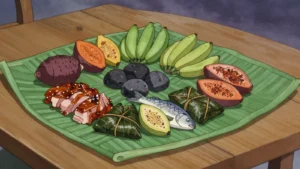 UmuAbove-ground oven of hot volcanic stones cooking pork, taro and fish.
 Cha Houy TeukShaved-ice dessert with grass jelly, sago and coconut milk
 Pastelitos de guayabaFlaky puff pastries with guava and cream cheese
 SemitaLayered sweet bread, a bakery and coffee-time staple
 Guava cheeseGuava pulp boiled with sugar to a firm paste, cut and rolled in sugar
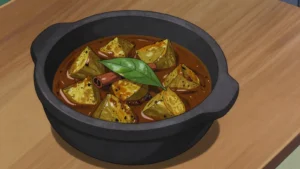 Polos CurryYoung green jackfruit simmered dark with roasted spices
 Ladobplantain and sweet potato poached in vanilla coconut milk
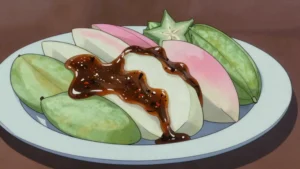 RujakUnripe fruit tossed in a dressing of palm sugar, tamarind, chilli and shrimp paste
Tropical fruit is tagged on 97 dishes from 52 countries in the atlas. These notes are written from general knowledge and carry no per-fact citation — see About.