A starchy banana treated as a vegetable, and one whose behaviour changes completely between green and black — the same fruit gives chips or a caramelised dessert depending only on when you cut it.
Where it comes from
Plantains and bananas are the same genus and largely the same domestication story, out of Southeast Asia and New Guinea, but the starchy cooking types found their real home in West and Central Africa and, later, the Caribbean and Latin America. In parts of Central Africa they are a staple in the way potatoes are in Europe.
The distinction between banana and plantain is culinary rather than botanical. Where cooking bananas are eaten widely, several distinct types are named and used differently, and the flat two-way split is a convenience of export markets.
Varieties
- Green plantain — Hard, starchy, barely sweet. Fried twice for tostones and patacones, boiled, or pounded into fufu.
- Yellow plantain — Ripening, sweeter, softer. Fried into maduros, which caramelise on the outside.
- Black plantain — Fully ripe, very sweet, almost custardy. Baked whole or fried as a dessert.
- East African highland bananas — Matoke and its relatives, steamed and mashed as a staple rather than fried.
In the kitchen
A green plantain will not peel like a banana. Cut the ends, score the ridges of the skin lengthways and lever it off, ideally under water or with oiled hands, because the sap stains and sets like glue.
Tostones work because the plantain is fried, flattened and fried again: the first fry cooks the starch through, the second crisps a surface that has been opened up by the flattening. One fry gives a hard, dry disc.
Dishes with plantain
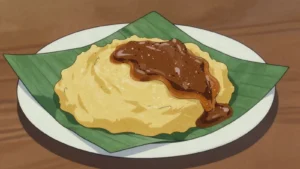 Matookegreen bananas steamed in leaves and mashed, served with groundnut sauce
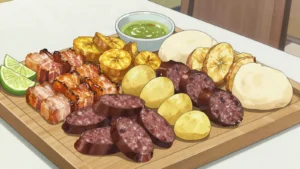 FritangaShared platter of fried pork, chorizo, blood sausage, potatoes and plantain
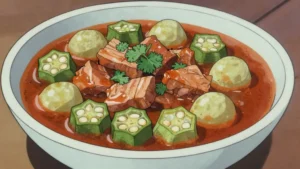 QuimbombóOkra stewed with pork, plantain dumplings and sofrito
 CorvicheFried ball of green plantain dough stuffed with fish and peanut
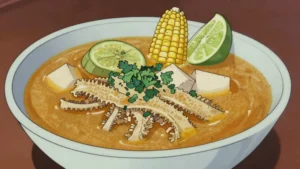 Sopa de mondongoTripe soup with yuca, plantain and corn in a rich broth
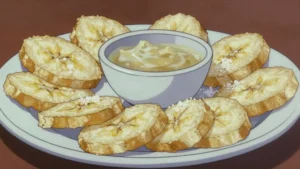 TostonesTwice-fried smashed green plantains
 TataleSpiced overripe-plantain pancakes
 Empanadas de plátanoFried plantain dumplings filled with milk custard
Plantain is tagged on 91 dishes from 42 countries in the atlas. These notes are written from general knowledge and carry no per-fact citation — see About.