The staple of more people than any other single food, and a grain where the shape of the individual seed decides almost everything about how the dish behaves.
Where it comes from
Asian rice, Oryza sativa, was domesticated in the Yangtze valley in China; African rice, Oryza glaberrima, was domesticated independently in the inland delta of the Niger. Almost all rice traded today is the Asian species, in two great subgroups — long-grained indica and short-grained japonica.
Rice is grown in flooded paddies not because it needs standing water but because it tolerates it and weeds do not. The water is a herbicide.
Varieties
- Basmati — Long, slender, ages in store to concentrate its aroma. Cooks to separate dry grains — the rice for pilaf and biryani.
- Jasmine — Long-grained, softer and slightly sticky, faintly floral. The everyday rice of Thailand and much of Southeast Asia.
- Arborio, Carnaroli, Vialone Nano — Short, fat, very high in the starch that dissolves into the cooking liquid. Risotto — the creaminess is released starch, not cream.
- Japonica / sushi rice — Short and sticky when cooked, so it holds together in a mouthful or under a slice of fish.
- Glutinous rice — Contains almost no amylose and cooks to a chewy mass. Steamed sticky rice, mochi and rice cakes. Nothing to do with gluten.
- Bomba — Spanish short grain that absorbs a lot of liquid without breaking down, which is why paella can be flavoured heavily and still stay in separate grains.
- Red and black rices — Unpolished, with pigmented bran. Firmer bite, longer cooking, nuttier.
- Parboiled — Steamed in the husk before milling, which drives nutrients into the grain and makes it very forgiving to cook.
In the kitchen
The choice between rinsing and not rinsing is the choice between separate grains and a creamy mass. Rinse for pilaf and plain steamed rice; never rinse for risotto, where the surface starch is the point.
Most rice is cooked by absorption, where the ratio and the lid do the work and stirring only breaks grains. Risotto is the exception and is stirred precisely to break them.
Choosing and keeping
Cooked rice left at room temperature is a genuine food-poisoning risk: Bacillus cereus spores survive cooking and multiply in the warm grain. Cool it fast and refrigerate it, and reheat it once, thoroughly.
Brown rice has its oily bran intact and goes rancid within months. White rice keeps for years.
Dishes with rice
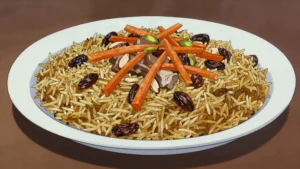 Kabuli PulaoNational rice pilaf with lamb, caramelised carrots, raisins and almonds
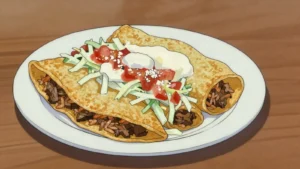 Enchiladas nicaragüensesTortilla pockets stuffed with seasoned rice and meat, fried and dressed with salad
 Samak safigrilled rabbitfish, the island's favourite catch, served with rice and lime
 LechonaTolima whole pig roasted crisp, stuffed with rice, peas and pork
 Mombarsausage casings stuffed with spiced rice and herbs, boiled then fried crisp
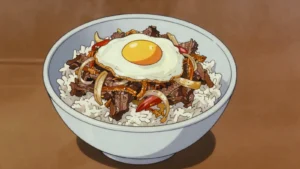 Tinned Corned BeefImported corned beef fried with onion and rice, a mainstay of the modern diet
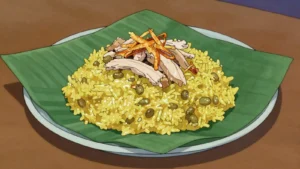 XoiSticky rice with toppings from mung bean to shredded chicken
 Risotto alla milanesesaffron-gilded risotto, classic beside ossobuco
Rice is tagged on 509 dishes from 144 countries in the atlas. These notes are written from general knowledge and carry no per-fact citation — see About.